Category Archives: World

Everyday xenogarbology: Space Dust

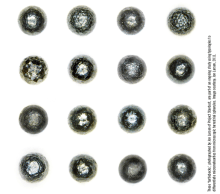
By Max Liboiron. One of the central tensions in discard studies is the othering and externalizing of  waste that originates in often intimate and everyday spaces and processes. This tension is maintained via material infrastructure (see, for example, Jennifer Clapp’s “The Distancing of Waste” or Coverly’s “Hidden Mountain“) and social), taboo (see Douglas’ Purity and Danger, or Inglis’ […]
Read More »
Scientists Call to Classify Plastic Waste as Hazardous Waste

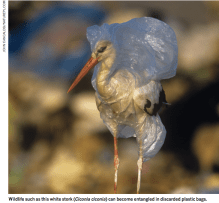
By Max Liboiron. An international group of scientists, including the young Chelsea Rochman and Mark Anthony Browne from California, with the support of the veteran marine scientist Richard Thompson from the UK and a host of others from the USA and Japan, has called on policy-makers to classify plastic waste as hazardous waste. Their argument, published in the latest issue of […]
Read More »

Global Food Report: 30–50% global food produced is discarded

By Max Liboiron. The Institution of Mechanical Engineers released their report on Global Food trends in anticipation of massive human population growth in the next 50 years. The trend that mattered most was the acute waste of nearly half the global food supply: Today, we produce about four billion metric tonnes of food per annum. […]
Read More »

Dumpster Diving

Reblogged from our friends at the fantastic Material World Blog. Aliine Lotman (Anthro Dept, EHI, Tallinn University) “Until the 19th century, the term ‘to consume’ was used mainly in its negative connotations of  ‘destruction’ and ‘waste’.  Tuberculosis was known as ‘consumption’, that is, a wasting disease.  Then  economists came up with a bizarre theory, which […]
Read More »

CFP: Excretion: Cognition, Perception and Behaviour in Rapidly Transitioning Cities of the Global South

Royal Geographical Society/ Institute of British Geographers Annual International Conference 2013 London August 28-30, 2013 Organiser: Deljana Iossifova, University of Manchester This session aims to bring together research related to one of the most perturbing issues for growing and developing cities of the Global South and their existing and future residents: attitudes toward excretion. Excretion-related […]
Read More »

Article Alert- Dispossession by Accumulation

Antipode has published Tom Perreault’s “Dispossession by Accumulation? Mining, Water and the Nature of Enclosure on the Bolivian Altiplano.” The article is noteworthy not only because it discusses some of the objects of discard studies–namely, pollution– but also because it figures industrial discards as a form of accumulation. The accumulation in question is capitalistic primitive accumulation […]
Read More »

Garbage City

This is Dutch photographer Bas Princen’s staggering panorama of the Zabaleen settlement in Cairo, Egypt’s capital.  These residents, living in an area known as garbage city, store, sort and recycle trash to earn their living.  The photograph was included in the International Architecture Biennale Rotterdam and an exhibition at Storefront Art and Architecture in New […]
Read More »

Discard Studies and the Nonhuman

Guest post by Josh Lepawsky Have we students of discard studies given sufficient thought to the nonhuman? The nonhuman in the form of materiality and the agencies of things is certainly a prevalent theme in the multiplying and ramifying work constituting discard studies. But there is, of course, more to the nonhuman than ‘stuff’ and […]
Read More »

Article Alert-Tactics of Waste, Dirt and Discard in the Occupy Movement

Currently “Tactics of Waste, Dirt and Discard in the Occupy Movement” is published as a forthcoming article in Social Movement Studies: Journal of Social, Cultural and Political Protest, but will soon be part of a special issue on the Occupy movement. From August until September, the special issue will have free and open access. When […]
Read More »

“Singapore is a gold mine”: Re-Orienting global trade flows of secondhand electronics. Guest post by Creighton Connolly.

Trade within developing regions is increasing in prevalence due to the falling price of electronics and increasing affluence in those countries. This finding thus makes the Basel Convention largely irrelevant, as it only bans trade from developed to developing regions. Yet, it is clear that Singapore generates at least as much, if not more electronic waste per capita than European and North American countries. Therefore, national e-waste legislation, as well as international policy aiming to reduce the international flow of secondhand electronics, such as the Basel Convention as well, needs to take seriously the role that countries like Singapore play as significant sources of such devices.