Author Archives: guestauth0r

Students create concept models for Giant Mine markers: Communicating contamination in perpetuity

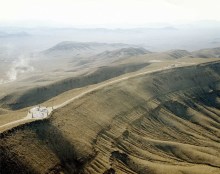
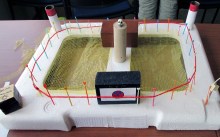
By Arn Keeling “Project Dystopia,” “The Information Tomb” and the “Giant Facility for Environmental Hazards” were among the conceptual models developed for markers and warning systems at Yellowknife’s Giant Mine by a class of cultural geography students at Memorial University. The abandoned Giant Mine in Canada’s Northwest Territories is the location of 237,000 tonnes of […]
Read More »

The Dirty Details: A Response to “Tales of the Trash”

Hessler’s inadequate portrayal of Cairo’s trash tales also comes with some disconcerting ethical issues. In writing about Sayyid, Hessler draws attention to people and things that are often ignored. But besides producing an interesting story, what risks are associated with making the invisible visible?

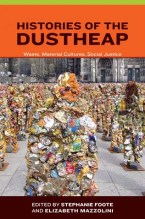
Review of Histories of the Dustheap: Waste, Material Cultures, Social Justice

The key question of this collection is political. It asks what the analysis of garbage, of the materiality of the dustheap, contributes to our understanding of human social relations and political aspirations. Three key themes structure this text: subjectivity, place and cultural contradiction. Each is developed in such a way as to demonstrate the political tensions and struggles that are embodied in efforts to dispose of waste. Of these, the last is perhaps the most well developed through the volume as a whole, providing a point of unity for the other essays.

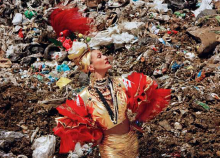
CFP: So-called waste’: Forms of Excess in Post-1960 Art, Film, and Literature

Visual art, film, and literature since 1960 has been marked by leftovers, repetitions, and time lags, despite emerging in a climate of accelerated technological development and the erasure of leisure time. From artworks that incorporate the trash and detritus of consumerist excess to novels and films that indulge in narrative ‘time-wasting,’ the cultural production of the last fifty years has revelled in the wasteful and excessive. This event asks: what are the aesthetics of excess?

Special edition on pharmaceuticals in the environment

In casual and professional conversations, people have been voicing their concerns that the environment is awash in pharmaceuticals. The Royal Society (Biology) has put together an special issue focusing on the issue. The provides an overview on the state of the knowledge around pharmaceuticals in the wild.

New Article Alert! Power, Quiescence, and Pollution: The Suppression of Environmental Grievances

There’s a new article in Social Currents by Thomas Shriver, Alison Adams, and Chris Messer, “Power, Quiescence, and Pollution The Suppression of Environmental Grievances.” It looks at the specific mechanisms by which quiescence, the state of quietness or inactivity, is fostered in the face of power inequalities around local industrial pollution.

New Article! Toward a New Theory of Waste: From ‘Matter out of Place’ to Signs of Life

Josh Reno’s new article “Towards a New Theory of Waste: From ‘Matter out of Place’ to Signs of Life” is in November’s Theory, Culture and Society. In the article Reno proposes to re-orients the whole of “waste studies” by changing its object of interest, it’s operative metaphor, and the type of entities that create waste: “In this paper, I ask what it might mean for conceptions of waste, and critical theory more broadly, if we were to start from a different approach, bio-semiotics, modelled on an alternative substance, animal faeces” (2).

Article Alert! Adjudicating Deep Time: Revisiting the United States’ High-Level Nuclear Waste Repository Project at Yucca Mountain

This paper draws upon perspectives on legal personhood, expert knowledge practices, and social relations influential in STS and anthropology to revisit the legal procedural framing of the United States’ now-defunct high-level nuclear waste repository project at Yucca Mountain.

Bringing Waste to Public Spaces: Discussion with Artist Keeley Haftner

Keeley Haftner’s public art, two shrink-wrapped bails of recyclable materials, was inspired by her time as a sort-liner at the city’s local recycling plant. Now vandalized, draped in a black tarp and bearing a sign that states, “Our tax dollars are for keeping garbage OFF the streets”, the installation has started a dialogue about waste and art in public spaces.

New report on Race, Poverty, and Chemical Disasters

The report, called “Who’s in Danger? Race, Poverty, and Chemical Disasters,” sought to examine who lives in “fenceline” neighborhoods adjacent to large chemical plants. The report said those residents were more likely to be black or Latino and have lower home values, incomes and education levels than average Americans.