Author Archives: guestauth0r

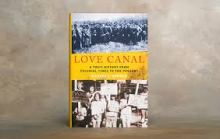
Review of ‘Love Canal: A Toxic History from Colonial Times to the Present’

Richard S. Newman’s recent book offers a new history of Love Canal, the neighborhood near Niagara Falls that became notoriously contaminated by buried chemical waste. As residents became aware of the leaching chemicals and associated health risks, they organized to investigate the problems and demand government action.

CFP: Waste, Space, and Place

We invite papers from multiple disciplines to engage with the topics of waste, wastage, wasting, waste-ability, rescue and salvage in relation to space and place.

CFP: Sciences, savoirs et pratiques des déchets: Dialogues entre mondes européens et américains

(English below, Spanish here, Portuguese here) Colloque international Sciences, savoirs et pratiques des déchets. Dialogues entre mondes européens et américains 23 et 24 Novembre 2017 A l’Institut des Amériques (IdA), Paris 60, boulevard du Lycée, 8ème étage – 92170 Vanves Ce colloque s’intéresse aux déchets comme objets de sciences, de savoirs et de pratiques. En […]
Read More »

CFP: Waste, Materialities & Meaning: Anthropological Engagements with Reuse, Repair and Care (4/7 deadline)

This panel seeks to both critically and productively engage with long-standing and emergent efforts to prevent waste through repair, care and reuse.

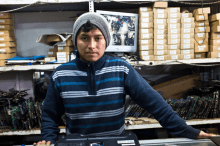
Electronics Reuse and Recycling in Peru: A Photographic exploration

A walk down this little street in Peru’s capital provides a glimpse into an understated network that quietly plays a critical role in reducing the environmental impacts of our global production and consumption patterns of electronic devices.

How the ‘guerrilla archivists’ saved history – and are doing it again under Trump

“Guerrilla archiving” is a new term, one that can’t be found in scholarly archival literature. But examples of this behavior have cropped up in hostile political climates throughout history. Ordinary people smuggled, copied or collected materials in the fear that ideas – or even the memories of an entire community – might be lost. In this case, people are archiving environmental data.

We need to think about redefining citizenship in the Anthropocene

The concept of citizenship originally described inhabitants of (probably walled) towns. Some insistence on specificity of place certainly remains, although the concept today generally refers to nations rather than cities. But what are concerned citizens to do in the face of problems such as climate change, which cannot easily be contained by walls or borders, and to which we all contribute?

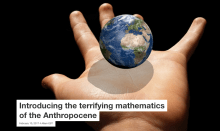
Introducing the terrifying mathematics of the Anthropocene

In 2000, Nobel laureate Paul Crutzen and Eugene Stoermer proposed that human impact on the atmosphere, the oceans, the land and ice sheets had reached such a scale that it had pushed Earth into a new epoch. They called it the Anthropocene and argued the current Holocene epoch was over.

When Deep Time Becomes Shallow: Knowing Nuclear Waste Risk Ethnographically

When reflecting on these intertwined day-to-day, multi-decade, centurial, and multi-millennial horizons of nuclear waste risk all at the same time, a different set of sensibilities emerges. Namely, it becomes evident how relatively short-term events like unanticipated deaths, retirements of key experts, obsolescence of information storage technologies, and surprise career-changes can potentially shake nuclear waste management projects’ stabilities.

An Introduction to Hoarding

One the one hand, hoarding is framed as a response to material deprivation. On the other, it is understood to result from the excesses of the late capitalist mode of production.