Author Archives: Max Liboiron

“Article” alert- Beyond Passaic: Contamination, security threats, hobo encampments. A Meadowlands photo essay.

A stunning, melancholy, mysterious landscape ethnography has just been published by Triple Canopy. Triple Canopy supports non-traditional, multimedia “articles” particularly well suited to projects on waste, as “Beyond Passaic: Contamination, security threats, hobo encampments. A Meadowlands photo essay” proves. The artist-author Bryan Zanisnik walks through the no-man’s land of The Meadowlands, a combination of parks, […]
Read More »
“Eating Rotten Meat Does not Disgust them” 3-14-12

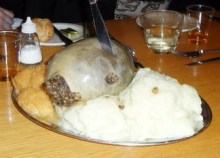
The Middle East and Middle Eastern American Center at CUNY is sponsoring a talk by Tarek El-Ariss entitled, “Eating Rotten Meat Does not Disgust them” Ahmad Faris al-Shidyaq (1804-1886) on British Food and Civilization. This is a rare treat for discard studies scholars, since we often dwell on solid waste as the site of expulsion, […]
Read More »

CFP- Environments of Waste: Representation and Ecologies of Pollution

Panel for Society for Literature, Science, and the Arts (SLSA) Conference Milwaukee, Wisconsin, Sept 27-30, 2012 Working Description:: Environments of Waste: Representation and Ecologies of Pollution This panel aims to bring together interdisciplinary research, theory and art regarding garbage, waste, anti-landscapes, rubbish, junk, toxic discourse, pollution and external spaces. Waste as an entity has become […]
Read More »

Call for Submissions: Material World Occasional Paper Series

Material World is seeking submissions for our new Occasional Paper Series. In this we aim to make available works that are hard to publish in conventional academic environments because they are multi-media, long or short, reports, polemical, or otherwise exploratory, creative and innovative. Our Occasional Paper Series is fully peer-reviewed and is indexed by the […]
Read More »

How to Describe Tsunami Debris

Posted by Max Liboiron A recent post by Nancy Wallace, Director of the NOAA Marine Debris Program, lays out the simple facts of what we do and do not know about floating debris from Japan’s tsunami in the wake of often unfounded, always spectacular coverage by mainstream news. No, there will not be human remains. […]
Read More »

Dumpster Diving for Digitial Waste

By Max Liboiron. That’s right, diving for digital waste, not e-waste. We are familiar with curbside scavengers and recycling programs for electronic hardware, but how do you dumpster dive all those deleted files, those 1’s and 0’s you drag to your desktop bin every day? What about upcylcing digital waste? This is where Dumpster Drive […]
Read More »

Visual Culture of Food Waste Data: Theaters of Proof

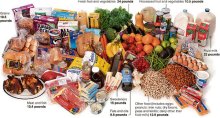
By Max Liboiron A lot of discard issues are about scale. Scale is expressed in functions of measurement or computation, yet scale is more than a quantitative sum. Scale is always relative (“bigger,” “smaller,” “less than,” “twice as much,” “a quarter of”), and therefore relational. So scale is not merely about being big or small. […]
Read More »

Material Literacy and Fix-it Clinics

By Max Liboiron A number of volunteer Fixit Groups have evolved in the past few years to bring people material know-how and empathy to their ill and ailing possessions. The volunteers are eloquent and articulate when it comes not only to instructing you on how to fix your broken object, but in terms of the […]
Read More »

Burning Trash: A Poem

Burning Trash By John Updike At night—the light turned off, the filament Unburdened of its atom-eating charge, His wife asleep, her breathing dipping low To touch a swampy source—he thought of death. Her father’s hilltop home allowed him time To sense the nothing standing like a sheet Of speckless glass behind his human future. He […]
Read More »

The Art of Mould

By Max Liboiron I love mould. It is invisible, yet suddenly visible if you let it take over parts of your fridge or bathroom; it can come back from the dead; it is neither animal nor plant. It is mysterious and beautiful. To that end, here are some artists who use mould as a medium […]
Read More »