
Resources for Observing and Understanding America Recycles Day
Wednesday is America Recycles Day. It’s a day that reveals the complex history of industry, consumer, and social attitudes towards the environment.
Wednesday is America Recycles Day. It’s a day that reveals the complex history of industry, consumer, and social attitudes towards the environment.

This review of a special issue of the Journal of Industrial Ecology titled, “Exploring the Circular Economy” is a virtual tour of circular economy definitions and current directions. The authors discuss and derive new definitions of “circularity.” They cover fundamental determinants of material lifespan, such as economic demand, thermodynamics, product design, and durability.
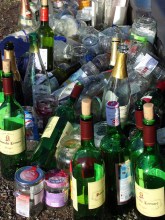
In an economic sense, it is usually municipal and state governments that account for the cost of damage waste causes to local environments when deciding how to deal with waste, but this cost is not already part of the price of goods or services that produce waste. Economists define this problem as a negative externality.

Why is recycling low on the waste hierarchy?

If I could only recommend one text in discard studies, it would be Recycling Reconsidered by Samantha MacBride (2011, MIT Press).

A walk down this little street in Peru’s capital provides a glimpse into an understated network that quietly plays a critical role in reducing the environmental impacts of our global production and consumption patterns of electronic devices.
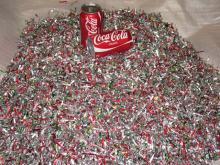
Calling reuse “recycling” a common and seemingly simple mistake, yet it is extremely important to differentiate between the two for political and environmental reasons.

A waste audit is an analysis of a localized waste stream from your building, household, classroom, town or business. It can identify what types of waste that local generates, and how much. How do you conduct an audit? What can you learn from one?

What is the circular economy, exactly? Is it capitalism with better accounting? Is it about scaling up recycling and reuse? Is it about consuming less, and producing less, or consuming and producing fundamentally differently? Does it go so far as to advocate for a degrowth or steady state economy, where the loop on production and consumption is totally closed?
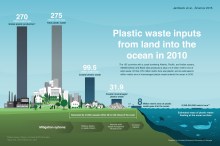
The Ocean Conservatory would like to burn 80% of the waste in coastal Asia with US-made incinerators. According to a wide range of experts and grassroots organizations from around the world, that’s a problem.

 Discard Studies