Category Archives: Waste

How to Describe Tsunami Debris

Posted by Max Liboiron A recent post by Nancy Wallace, Director of the NOAA Marine Debris Program, lays out the simple facts of what we do and do not know about floating debris from Japan’s tsunami in the wake of often unfounded, always spectacular coverage by mainstream news. No, there will not be human remains. […]
Read More »

Mall-ed

As shopping malls replace independent stores across the globe at a dizzying pace, we should pause to consider a number of vexing critical thinking questions: What types of things can a person buy at the shopping mall these days?  What are the hidden webs of economic interdependencies that we find ourselves caught up in when […]
Read More »

Dumpster Diving for Digitial Waste

By Max Liboiron. That’s right, diving for digital waste, not e-waste. We are familiar with curbside scavengers and recycling programs for electronic hardware, but how do you dumpster dive all those deleted files, those 1’s and 0’s you drag to your desktop bin every day? What about upcylcing digital waste? This is where Dumpster Drive […]
Read More »

SCRAP

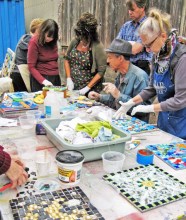
“From a recovered pillow to a gallery installation, from a home-made costume to classroom educational materials, creative reuse includes all projects that incorporate materials that would otherwise be thrown away. Folks who find materials at SCRAP are teachers, artists, crafters, and designers who transform what could have been discarded into something with new value.” From […]
Read More »

Visual Culture of Food Waste Data: Theaters of Proof

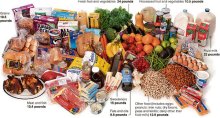
By Max Liboiron A lot of discard issues are about scale. Scale is expressed in functions of measurement or computation, yet scale is more than a quantitative sum. Scale is always relative (“bigger,” “smaller,” “less than,” “twice as much,” “a quarter of”), and therefore relational. So scale is not merely about being big or small. […]
Read More »

Seduction of the instantaneous

By Robin Nagle. There’s something to be said for deep engagement.  I agree with Wolfgang Iser, the literary theorist and co-founder of the sub-discipline of literary anthropology, who argued passionately that focused engagement with a text can truly transform the reader (see The Act of Reading).  Although Iser was mostly concerned with works of literature, his theory […]
Read More »

Material Literacy and Fix-it Clinics

By Max Liboiron A number of volunteer Fixit Groups have evolved in the past few years to bring people material know-how and empathy to their ill and ailing possessions. The volunteers are eloquent and articulate when it comes not only to instructing you on how to fix your broken object, but in terms of the […]
Read More »

Under the radar, off the books

By Robin Nagle “What is the aboriginal Self, on which a universal reliance may be grounded?”  Emerson, “Self Reliance” Nannies, drug dealers, pimps and prostitutes, freelance carpenters, water entrepreneurs, “gypsy-cab” drivers, babysitters, street vendors and sidewalk gamesmen — what they all share in common is a life spent precariously under the radar (Venkatesh 2006), or […]
Read More »

Reverse e-waste: Trash Amp and Vibroy Vibrating Speakers

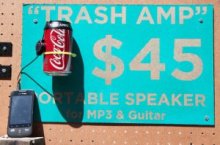
By Max Liboiron There are two new DIY inventions out there that turn trash into speakers: Vibroy Vibrating Speakers and Trash Amp. There are a few refreshing twists to these gadgets; not only do they reverse the usual electronics-into-e-waste life cycle by adopting throw away objects as integral parts of sound systems, but in doing […]
Read More »

Diversion, or The Social Life of Things

It has been twenty-five years since Arjun Appadurai penned “Commodities and the politics of value” as the introductory essay to the edited collection The Social Life of Things.  In the text he offers the reader what appears to be a simple truism, that “commodities, like persons, have social lives.”  Adding a dialectical twist to what […]
Read More »