Category Archives: Waste

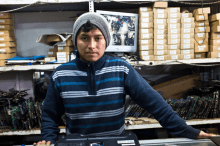
Electronics Reuse and Recycling in Peru: A Photographic exploration

A walk down this little street in Peru’s capital provides a glimpse into an understated network that quietly plays a critical role in reducing the environmental impacts of our global production and consumption patterns of electronic devices.
How the ‘guerrilla archivists’ saved history – and are doing it again under Trump

“Guerrilla archiving” is a new term, one that can’t be found in scholarly archival literature. But examples of this behavior have cropped up in hostile political climates throughout history. Ordinary people smuggled, copied or collected materials in the fear that ideas – or even the memories of an entire community – might be lost. In this case, people are archiving environmental data.

When Deep Time Becomes Shallow: Knowing Nuclear Waste Risk Ethnographically

When reflecting on these intertwined day-to-day, multi-decade, centurial, and multi-millennial horizons of nuclear waste risk all at the same time, a different set of sensibilities emerges. Namely, it becomes evident how relatively short-term events like unanticipated deaths, retirements of key experts, obsolescence of information storage technologies, and surprise career-changes can potentially shake nuclear waste management projects’ stabilities.

Post-Doctoral Fellowship: Grounding the Ecocritical: Materializing Wastelands and Living on in the Middle East (3/ 1)

2017-18 Andrew W. Mellon Visiting Post-Doctoral Fellowship The Department of Jewish, Islamic, and Near Eastern Languages and Cultures (JINELC) at Washington University in St. Louis invites applications for a post-doctoral fellow to participate in a Mellon Sawyer Seminar, “Grounding the Ecocritical: Materializing Wastelands and Living on in the Middle East.” This one-year position begins on […]
Read More »

Research challenges the view that environmental regulators are anti-business

Interactions between regulators and the private sector at the federal and state levels typically are collegial, and that both sides work to build and maintain cooperative partnerships.

Graduate Scholarships in Solid Waste Research (USA)

The Environmental Research & Education Foundation (EREF) is one of the largest sources of solid waste research funding in the U.S., allocating approximately $1 million annually in research grants and graduate level scholarships.

CFP: Treating Waste as a Resource

CFP: ‘Treating Waste as a Resource’
RGS-IBG conference
29 Aug – 1 Sept, 2017
London, UK

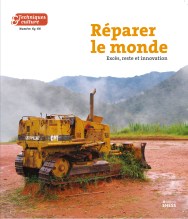
Special Issue of Techniques & Culture on Réparer le monde/Fixing the world: Excess, Leftover and Innovation

What should we make of the ever more excessive production of remainders? What spaces of creativity and innovation struggle against, emerge from, or make visible this seemingly hidden facet of our modernity?

Article Alert! New writing in discard studies

New articles in discard studies, from December 2016 to January 2017.

Precision is not accuracy.

We often use the words precision and accuracy interchangeably in everyday conversation, but in statistics they mean different things.