
CFP: Waste, Space, and Place
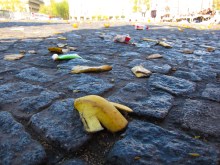
We invite papers from multiple disciplines to engage with the topics of waste, wastage, wasting, waste-ability, rescue and salvage in relation to space and place.
CFP: Sciences, savoirs et pratiques des déchets: Dialogues entre mondes européens et américains
(English below, Spanish here, Portuguese here) Colloque international Sciences, savoirs et pratiques des déchets. Dialogues entre mondes européens et américains 23 et 24 Novembre 2017 A l’Institut des Amériques (IdA), Paris 60, boulevard du Lycée, 8ème étage – 92170 Vanves Ce colloque s’intéresse aux déchets comme objets de sciences, de savoirs et de pratiques. En […]
Read More »
Article Alert! New texts in discard studies!
Discard Studies publishes a regular table of contents alerts for articles, reports, and books in the field.
CFP: Waste, Materialities & Meaning: Anthropological Engagements with Reuse, Repair and Care (4/7 deadline)
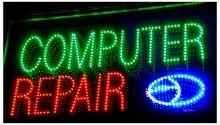
This panel seeks to both critically and productively engage with long-standing and emergent efforts to prevent waste through repair, care and reuse.

Maintainers II, April 6-9, 2017: Program & Registration
The program is up and registration is open for Maintainers II: Labor, Technology, and Social Orders, which will be held at Stevens Institute of Technology in Hoboken NJ from April 6-9, 2017. Program: http://themaintainers.org/maintainers-ii-program/ Registration, Hotel, Travel: http://themaintainers.org/2017-conference-registrationhoteltravel/ The program features ~71 presentations spread across 18 panels, including 2 opening plenary panels on Thursday afternoon, […]
Read More »

Two newly launched open-access waste journals
There are two new open-access journals on waste: Worldwide Waste Journal of Interdisciplinary Studies and the Journal of Waste Management and Environmental Issues
Electronics Reuse and Recycling in Peru: A Photographic exploration
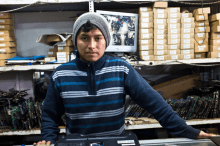
A walk down this little street in Peru’s capital provides a glimpse into an understated network that quietly plays a critical role in reducing the environmental impacts of our global production and consumption patterns of electronic devices.
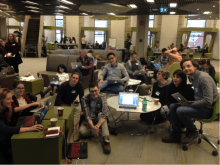
How the ‘guerrilla archivists’ saved history – and are doing it again under Trump
“Guerrilla archiving” is a new term, one that can’t be found in scholarly archival literature. But examples of this behavior have cropped up in hostile political climates throughout history. Ordinary people smuggled, copied or collected materials in the fear that ideas – or even the memories of an entire community – might be lost. In this case, people are archiving environmental data.

We need to think about redefining citizenship in the Anthropocene
The concept of citizenship originally described inhabitants of (probably walled) towns. Some insistence on specificity of place certainly remains, although the concept today generally refers to nations rather than cities. But what are concerned citizens to do in the face of problems such as climate change, which cannot easily be contained by walls or borders, and to which we all contribute?

Difference in the Anthropocene: Indigenous Environmentalism in the Face of Settler Colonialism
Both Todd and Whyte argue that achieving climate justice for and by Indigenous people requires addressing the ways in which global environmental change is intimately connected with— and in fact is predicated upon— practices of settler colonialism.

 Discard Studies