
Nuclear State, Nuclear Waste
Nuclear State, Nuclear Waste: Emily Simmonds on Canada as a nuclear nation & ongoing colonialism through uranium mining.
Nuclear State, Nuclear Waste: Emily Simmonds on Canada as a nuclear nation & ongoing colonialism through uranium mining.

Recycling was never just a solution to a disposal crisis, and it did not uniformly reduce total waste management costs. Rather, it addresses a range of other concerns which are equally valid but nearly impossible to quantify.

After riding along with Bill that day, I started wondering about the morality of turning dead deer into “zoological garbage.”[3] If how we treat the dead influences how we treat the living, then the most obvious question is whether this is a respectful way to treat the dead.
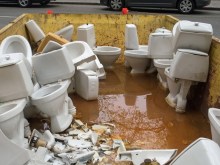
By Susan Ross Construction, renovation, and demolition (CR&D) waste can represent from 30 to 50% of municipal solid waste (Yeheyis et al, 2013). Yet this area of discard studies seems chronically understudied. Susan Ross, Assistant Professor at Carleton University, Canada, provides an extended bibliography on the topic, with a focus on one aspect of demolition […]
Read More »

By Susan Ross Building deconstruction refers to the careful taking apart of a building to salvage its reusable materials and components. These are either stored on site for short-term integration in a new design, or removed to a salvage yard for use at a later date. Whereas prevailing mechanical demolition creates mounds of unsorted debris […]
Read More »

Canadian regulators are all over the map with respect to flame retardants. On PBDEs, Canada infamously refused to take meaningful regulatory action. The government found most PBDEs to be toxic substances in 2006, but it declined to ban or restrict them in consumer products in 2008 or in 2016.

Wednesday is America Recycles Day. It’s a day that reveals the complex history of industry, consumer, and social attitudes towards the environment.

This review of a special issue of the Journal of Industrial Ecology titled, “Exploring the Circular Economy” is a virtual tour of circular economy definitions and current directions. The authors discuss and derive new definitions of “circularity.” They cover fundamental determinants of material lifespan, such as economic demand, thermodynamics, product design, and durability.

Neighborhoods with median annual incomes below US$25,000 were nearly 2 decibels louder than neighborhoods with incomes above $100,000 per year. And nationwide, communities with 75 percent black residents had median nighttime noise levels of 46.3 decibels – 4 decibels louder than communities with no black residents. A 10-decibel increase represents a doubling in loudness of a sound, so these are big differences.
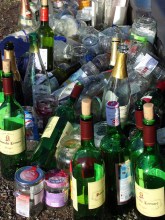
In an economic sense, it is usually municipal and state governments that account for the cost of damage waste causes to local environments when deciding how to deal with waste, but this cost is not already part of the price of goods or services that produce waste. Economists define this problem as a negative externality.

 Discard Studies