Author Archives: Max Liboiron

A Companion for Sewer Catastrophes

By Max Liboiron Sewers are the most expensive and expansive urban infrastructures in North America. They are underground. They are made of inflexible pipes.They are difficult to access. And increasingly unpredictable acts of nature, from earthquakes to climate disruption, are making the probability of their spectacular, large-scale failure something to take note of. A couple […]
Read More »

CFP: Re-Cycle Architecture

Publication Deadline: 2012-07-18 (in 18 days) Boundaries introduces a call for papers on the following subject: «Re-Cycle Architecture». Recycle has to be intended here not as a new vague for aesthetic or marketing trends, but as re-use, “life cycle extension” for materials and objects. This new cycle affect the materiality of the existing, its functions […]
Read More »

Communicating Eternity: A Typological Guide to America’s Ephemeral Nuclear Infrastructure

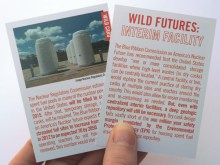
By Max Liboiron We all know waste doesn’t go “away.” We know about landfills, transfer stations, blue boxes, and ocean plastics. We know special types of waste, such as nuclear waste, has similar infrastructure, but imagine that infrastructure is somewhere “away.” Or is it? Repository: A Typological Guide to America’s Ephemeral Nuclear Infrastructure,is a 42-card […]
Read More »

OWS vs. City of New York: Leveraging Discard Politics

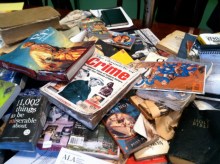
By Max Liboiron Occupy Wall Street, and specifically representatives of the People’s Library, are suing New York City’s Mayor Bloomberg, its police commissioner Ray Kelly, the Sanitation Commissioner John Doherty, and other City officials in the seizure and discard of 2,798 books during the raid on Zuccotti Park on November 15, 2011. If you are […]
Read More »

Speaking out of place: First Amendment Rights Area

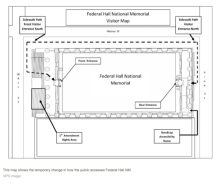
By Max Liboiron. When visiting National Parks, be sure to note the location of the nearest “1st Amendment Rights Area.” As a reminder, this is the First Amendment: “Congress shall make no law respecting an establishment of religion, or prohibiting the free exercise thereof; or abridging the freedom of speech, or of the press; or […]
Read More »

Ocean waste: The absurdity of matter out of place

By Max Liboiron The Surfrider Foundation’s mission “is the protection and enjoyment of oceans, waves and beaches through a powerful activist network.” As it turns out, that means most of their work has to do with discards, waste and pollution. Litter, oil spills, wasting water, plastic trash, and chemical runoff are some of their primary […]
Read More »

Swept Away: Dust, Ashes, and Dirt in Contemporary Art and Design

There’s a show up at New York City’s underappreciated Museum of Art and Design. Swept Away: Dust, Ashes, and Dirt in Contemporary Art and Design includes “works that deal with issues such as the ephemeral nature of art and life, the quality and content of memory, issues of loss and disintegration, and the detritus of human […]
Read More »

WasteDiversions: Sculpture and Collage from New York’s Waste Stream

WasteDiversions: Sculpture and Collage from New York’s Waste Stream March 29 – October 4, 2012 Opening reception March 29, 6-9 pm MFTA Gallery is pleased to present WasteDiversions: Sculpture and Collage from New York’s Waste Stream, an exhibition of new sculpture and collage by artists from MFTA recipients Culture Push and Vaudeville Park, as well as […]
Read More »

In Colonial Shoes: Notes on the Material Afterlife in Post-Oslo Palestine

Guest post by Sophia Stamatopoulou-Robbins Close-up of used goods in Jaffa’s pishpushim market. All pictures in this article were taken by the author. Introduction: The Toilet Bowl Graveyard A strange and unexpected kind of waste fell across my path as I set out to research what I had neatly packaged for myself as “the politics […]
Read More »

CFP: Slum Clearance 1900-1930 3/11

SLUM CLEARANCE, 1900-1930 Urban History Association (UHA) New York City, NY 26-28 October, 2012 http://uha.udayton.edu/conf.html Deadline: 11 March, 2012 I’m interested creating a panel for the UHA meeting that treats major downtown rebuilding projects (such as City Beautiful civic projects, union stations, and others) that occurred prior to the postwar “urban renewal” era as slum […]
Read More »