Category Archives: Activism

Grassroots Mappping: Waste

Public Lab publishes a magazine on “cutting edge techniques in hacking environmental science” called the Grassroots Mapping Forum, and the newest edition is on waste, highlighting waste methodologies that are accessible, inexpensive, and democratic: the premises of citizen science.

Modern Waste is an Economic Strategy

Industry developed disposability through planned obsolescence, single-use items, cheap materials, throw-away packaging, fashion, and conspicuous consumption. American industry designed a shift in values that circulated goods through, rather than into, the consumer realm. The truism that humans are inherently wasteful came into being at a particular time and place, by design.

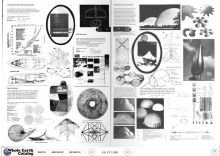
The Rare Earth Catalog (and Research Group): Tools for Reckoning with the Anthropocene

The Rare Earth Catalog will be a repository of tools: from the critical, to the conceptual, to the practical, that can help us resist, rework, redefine, and remember the interconnections of our socio-ecological present. We are seeking collaborators to help us envision and ultimately produce the Catalog. We are also interested in receiving contributions of (short) texts and images that connect specific examples of climate-change related politics and processes to a wide range of themes, including waste, fixing, and pollution.

New report on Race, Poverty, and Chemical Disasters

The report, called “Who’s in Danger? Race, Poverty, and Chemical Disasters,” sought to examine who lives in “fenceline” neighborhoods adjacent to large chemical plants. The report said those residents were more likely to be black or Latino and have lower home values, incomes and education levels than average Americans.

Crowdsourcing light pollution data: A means of infrastructure awareness?

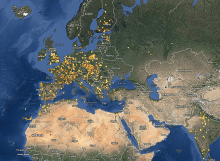
The Globe at Night project is an international citizen-science campaign to measure the impact of light pollution. It invites citizen-scientists (aka: you) to measure their night sky brightness and submit their observations from a computer or smart phone. Yet, gathering information for a scientific project is really a side effect of the goals of the project, which is to raise awareness of the problem. While my views on awareness campaigns tend toward the critical, in many ways this is a campaign for infrastructural awareness.

Solutions to waste and the problem of scalar mismatches

Waste advocacy and popular environmentalism suffer from a constant mismatch of scales. Problems are at one scale, and solutions are at another. This article calls for shift in cultural discourses that include proportion and scale so that information, problem identification, and proposed solutions are able to intervene into problems in meaningful and effective ways.

It Doesn’t Take a Fireman to Spot a Fire: Fighting Pollution with Citizen Science

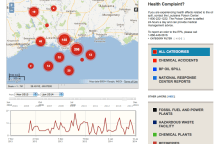
In early 2010 LABB introduced the iWitness Pollution Map to help Louisiana residents track pollution and associated health effects in their communities. Today there are over 11,000 reports of petrochemical pollution on the map. The iWitness Pollution Map is an open-source online map that allows anyone with a phone to document and share their experience with pollution via voicemail, text, email or by using the online form.

Against Awareness, For Scale: Garbage is Infrastructure, Not Behavior

The journey from awareness to behavior change is a long and arduous one, and few make it. Even for those who change their behavior, the scale of the change is often too small to impact the problem at hand. So what do we do?

Hoarding Discourse in the Aftermath of Hurricane Sandy

A telling discourse of hoarding emerged in the immediate aftermath of the storm from relief distribution hubs that collected and freely distributed food, clothing, and other material goods to those in need. In these cases, the concept of “hoarding” highlighted the differences–and politics–between equitable and equal distributions of goods.

Grassroots Communities Mining Mini-Grant Program

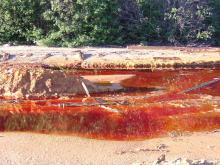
In acknowledgement of growing literature and projects on mining waste, and the extreme longevity and toxicity of their legacies, here is a grant opportunity for people working in those areas: