Category Archives: Waste

Tactics of Waste, Dirt and Discard in the Occupy Movement: A Photo Essay

By Max Liboiron It has been one week since the one year anniversary of Occupy Wall Street, September 17, 2012. In celebration, let’s look at the movement through the lens of discard studies. My article, “Tactics of Waste, Dirt and Discard in the Occupy Movement“, has just appeared in Social Movement Studies: Journal of Social, […]
Read More »

Recycling as a Crisis of Meaning

This article was originally published by Max Liboiron in eTOPIA: Canadian Journal of Cultural Studies, Spring 2010. In laymen’s terms, recycling is “good for the environment.” It involves “doing your bit” to help “save the Earth.” Yet recycling requires high expenditures of energy and virgin materials, and produces pollutants, greenhouse gases and waste; it creates […]
Read More »

George Constanza defines a “bum”

Here’s a tidbit from Scarlett Lindeman’s recent article in Gastronomica (reproduced in the Sept/Oct issue of the Utne Reader).  She takes this fragment of dialogue from the Seinfield Show in 1994 (The Gymnast episode).  Jerry sees that George has pulled an eclair out of the garbage dumpster: Jerry: But it was in the cylinder. George: Above […]
Read More »

Reclaiming places

New York’s High Line is a reclaimed, re-used place that attracts thousands of city residents and visitors to stroll in a park-like setting.  The High Line was a defunct freight rail on New York’s west side.  See their website for more on this fantastic case study in the transformation of neglected space into vibrant place. […]
Read More »

Designing a Reuse Symbol and the Challenge of Recycling’s Legacy

By Max Liboiron The “universal” recycling symbol was designed in 1970 for a competition during America’s first Earth Day. A large producer of recycled paperboard, the Container Corporation of America, sponsored the competition. The winner was Gary Anderson, an urban design student in California, who said that he designed the symbol as a Mobius strip, […]
Read More »

A Companion for Sewer Catastrophes

By Max Liboiron Sewers are the most expensive and expansive urban infrastructures in North America. They are underground. They are made of inflexible pipes.They are difficult to access. And increasingly unpredictable acts of nature, from earthquakes to climate disruption, are making the probability of their spectacular, large-scale failure something to take note of. A couple […]
Read More »

Philosophia, “No Impact Man,” and the reader of Discard Studies

We have a modest fern garden on the side of our home.  (Curiously, it is situated right in front of the plastic shed that holds my two trash containers.) I am the steward of the miniature garden; I take care of it, I tend to it.  This year I’ve given it more time.  It is […]
Read More »

Communicating Eternity: A Typological Guide to America’s Ephemeral Nuclear Infrastructure

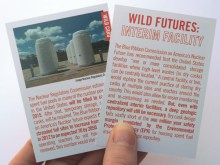
By Max Liboiron We all know waste doesn’t go “away.” We know about landfills, transfer stations, blue boxes, and ocean plastics. We know special types of waste, such as nuclear waste, has similar infrastructure, but imagine that infrastructure is somewhere “away.” Or is it? Repository: A Typological Guide to America’s Ephemeral Nuclear Infrastructure,is a 42-card […]
Read More »

Ocean waste: The absurdity of matter out of place

By Max Liboiron The Surfrider Foundation’s mission “is the protection and enjoyment of oceans, waves and beaches through a powerful activist network.” As it turns out, that means most of their work has to do with discards, waste and pollution. Litter, oil spills, wasting water, plastic trash, and chemical runoff are some of their primary […]
Read More »

Dumpsters, Muffins, Waste and Law

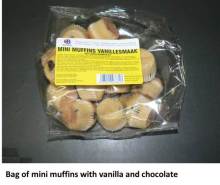
A guest post by Sebastian Abrahamsson and Katja de Vries. This is the fourth post in a series of guest posts by participants of the Association of American Geographers conference series on waste. Dumpsters, Muffins, Waste and Law Sebastian Abrahamsson and Katja de Vries I. This is a bag of muffins. Muffins are edible breads that […]
Read More »