
The Dirty Details: A Response to “Tales of the Trash”
Hessler’s inadequate portrayal of Cairo’s trash tales also comes with some disconcerting ethical issues. In writing about Sayyid, Hessler draws attention to people and things that are often ignored. But besides producing an interesting story, what risks are associated with making the invisible visible?
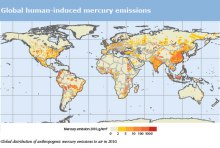
Special Issue on International Chemicals Regulation Following the Minamata Convention
Legal frameworks are one main way through which chemicals are defined: terms of harm, responsibility, and circulation, some of the defining features of pollution, are debated, agreed upon, and codified in legal forums. The Minamanta Convention on Mercury is the first environmental agreement in a decade to set these terms across nations.
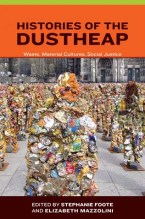
Review of Histories of the Dustheap: Waste, Material Cultures, Social Justice
The key question of this collection is political. It asks what the analysis of garbage, of the materiality of the dustheap, contributes to our understanding of human social relations and political aspirations. Three key themes structure this text: subjectivity, place and cultural contradiction. Each is developed in such a way as to demonstrate the political tensions and struggles that are embodied in efforts to dispose of waste. Of these, the last is perhaps the most well developed through the volume as a whole, providing a point of unity for the other essays.

A Cabinet of Curiosities for the Anthropocene
The Anthropocene is just one among many moments in time when new scientific objects have altered humanity’s relationship to the past, present, and future. Scientific objects such as fossils, radioactivity, genetic mutations, toxic pesticides, and ice cores, to name a few, have precipitated different narratives and imaginings of the human past and the human future. What might a cabinet of curiosities for the age of the Anthropocene look like?
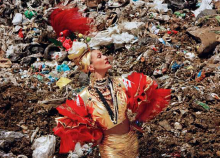
CFP: So-called waste’: Forms of Excess in Post-1960 Art, Film, and Literature
Visual art, film, and literature since 1960 has been marked by leftovers, repetitions, and time lags, despite emerging in a climate of accelerated technological development and the erasure of leisure time. From artworks that incorporate the trash and detritus of consumerist excess to novels and films that indulge in narrative ‘time-wasting,’ the cultural production of the last fifty years has revelled in the wasteful and excessive. This event asks: what are the aesthetics of excess?

Special edition on pharmaceuticals in the environment
In casual and professional conversations, people have been voicing their concerns that the environment is awash in pharmaceuticals. The Royal Society (Biology) has put together an special issue focusing on the issue. The provides an overview on the state of the knowledge around pharmaceuticals in the wild.

New Article Alert! Power, Quiescence, and Pollution: The Suppression of Environmental Grievances
There’s a new article in Social Currents by Thomas Shriver, Alison Adams, and Chris Messer, “Power, Quiescence, and Pollution The Suppression of Environmental Grievances.” It looks at the specific mechanisms by which quiescence, the state of quietness or inactivity, is fostered in the face of power inequalities around local industrial pollution.

Grassroots Mappping: Waste
Public Lab publishes a magazine on “cutting edge techniques in hacking environmental science” called the Grassroots Mapping Forum, and the newest edition is on waste, highlighting waste methodologies that are accessible, inexpensive, and democratic: the premises of citizen science.
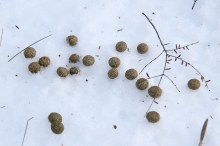
New Article! Toward a New Theory of Waste: From ‘Matter out of Place’ to Signs of Life
Josh Reno’s new article “Towards a New Theory of Waste: From ‘Matter out of Place’ to Signs of Life” is in November’s Theory, Culture and Society. In the article Reno proposes to re-orients the whole of “waste studies” by changing its object of interest, it’s operative metaphor, and the type of entities that create waste: “In this paper, I ask what it might mean for conceptions of waste, and critical theory more broadly, if we were to start from a different approach, bio-semiotics, modelled on an alternative substance, animal faeces” (2).

Top Ten Discard Studies posts
Discard Studies is four years old! Here are our top 10 posts of all time:

 Discard Studies