
Material Literacy and Fix-it Clinics
By Max Liboiron A number of volunteer Fixit Groups have evolved in the past few years to bring people material know-how and empathy to their ill and ailing possessions. The volunteers are eloquent and articulate when it comes not only to instructing you on how to fix your broken object, but in terms of the […]
Read More »

Burning Trash: A Poem
Burning Trash By John Updike At night—the light turned off, the filament Unburdened of its atom-eating charge, His wife asleep, her breathing dipping low To touch a swampy source—he thought of death. Her father’s hilltop home allowed him time To sense the nothing standing like a sheet Of speckless glass behind his human future. He […]
Read More »

The Art of Mould
By Max Liboiron I love mould. It is invisible, yet suddenly visible if you let it take over parts of your fridge or bathroom; it can come back from the dead; it is neither animal nor plant. It is mysterious and beautiful. To that end, here are some artists who use mould as a medium […]
Read More »

Under the radar, off the books
By Robin Nagle “What is the aboriginal Self, on which a universal reliance may be grounded?” Emerson, “Self Reliance” Nannies, drug dealers, pimps and prostitutes, freelance carpenters, water entrepreneurs, “gypsy-cab” drivers, babysitters, street vendors and sidewalk gamesmen — what they all share in common is a life spent precariously under the radar (Venkatesh 2006), or […]
Read More »
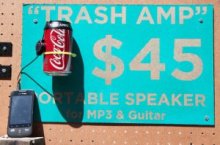
Reverse e-waste: Trash Amp and Vibroy Vibrating Speakers
By Max Liboiron There are two new DIY inventions out there that turn trash into speakers: Vibroy Vibrating Speakers and Trash Amp. There are a few refreshing twists to these gadgets; not only do they reverse the usual electronics-into-e-waste life cycle by adopting throw away objects as integral parts of sound systems, but in doing […]
Read More »

Diversion, or The Social Life of Things
It has been twenty-five years since Arjun Appadurai penned “Commodities and the politics of value” as the introductory essay to the edited collection The Social Life of Things. In the text he offers the reader what appears to be a simple truism, that “commodities, like persons, have social lives.” Adding a dialectical twist to what […]
Read More »
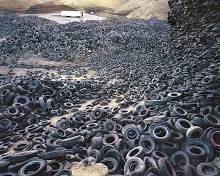
Terribly charasmatic piles of tires
By Max Liboiron. One of the most popular search phrases that leads people to the Discard Studies blog is “pile of tires.” Perhaps the terrible charisma of piles of tires is why people search for the term on Google with such regularity? Is it the smell, the orderly stacking as the tidier version of hoarding, […]
Read More »

Discard by Power: Occupy Wall Street’s People’s Library Dumped
By Max Liboiron One topic we rarely post about on Discard Studies is the connection between power and forced acts of waste. Robert Moses’s aggressive eviction-based freeways in the 1960s, landlord sponsored arson in Harlem and the Bronx in the 1970s, and, as of Monday, the forcible eviction of Occupy Wall Street from Zucotti Park […]
Read More »

Space Trash and Space Fence: Exotic yet familiar waste
By Max Liboiron. A new article in Scientific American by John Maston, “On the Trail of Space Trash,”shows that our most exotic garbage has a lot in common with other forms of waste. His article explains one of the newer problems with space debris: it is multiplying. A September report by the National Research Council […]
Read More »
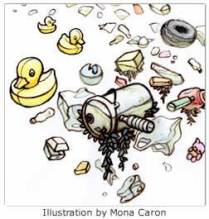
Shoes and ducks: pollutants as “proper” boundary objects
By Max Liboiron. In 1990, a sudden storm knocked twenty-one containers from a cargo vessel into the sea. Five contained 78,932 Nike shoes. The event was kept quiet by both the shipping company and Nike, but when hundreds of shoes began washing up on the shores of Vancouver Island in Canada, eight months later, beachcombers, […]
Read More »

 Discard Studies