Monthly Archives: June 2015

Plastic Smog and Horizontal Smoke Stacks: Representations of Pollution as Knowledge

Representations are the basis of human knowledge both in terms of how knowledge is made as well as how it is reproduced and circulated. They are the way reality is interpreted and conveyed for others. Our discussions about how to best convey what we’ve been researching have focused on being as clear, charismatic, and accurate as possible. We don’t want to give up accuracy to be more sensational. But we don’t want to make accurate statements that fall flat. Our goal is to do and describe science in a way that launches action that mitigates plastic pollution. How you describe a problem determines what kind of solutions make sense or not.
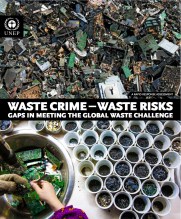
Criminal Negligence?

By Josh Lepawsky, Joshua Goldstein, and Yvan Schulz On 12 May 2015 the United Nations Environmental Program announced the release of a new report called Waste Crime – Waste Risks. Among the topics covered by the report is the global problem of discarded electronics or ‘e-waste’. After reading the report with a focus on the […]
Read More »

Sweeping Away Agbogbloshie. Again.

If non-Ghanaians are aware of Old Fadama/Agbogbloshie at all it is probably as the purported largest e-waste dump on Earth. This is a drastically mistaken image. The evictions that began a few days ago are only the most recent event in a longer struggle over land rights in Accra that have nothing to do with where the ‘West’s’ e-waste goes to die.

How the Ocean Cleanup Array Fundamentally Misunderstands Marine Plastics and Causes Harm

The road to hell is paved with good intentions. The Ocean Cleanup array, designed to clean plastics from the ocean like a baleen whale, is one of these good intentions: experts in marine plastics, including myself, say it’s a bad idea.Technological fixes like the Array do harm to the larger project of ending plastic pollution, which is a complex social, environmental, and economic problem. It is also going to damage and kill marine life.

Wasted Heat as Northern Commons: Hot Spots in the Square

Our project aims to unveil the potential for the Commons within the outdoor urban infrastructure of Churchill Square in St. John’s, Newfoundland, by locating heat leaks from wasted heat. We wanted to find out which areas in the Square provided a bit of warmth during the long, cold winter to imagine the possibility of public congregation or reclaimed community space.