Category Archives: Consumption

How the Ocean Cleanup Array Fundamentally Misunderstands Marine Plastics and Causes Harm

The road to hell is paved with good intentions. The Ocean Cleanup array, designed to clean plastics from the ocean like a baleen whale, is one of these good intentions: experts in marine plastics, including myself, say it’s a bad idea.Technological fixes like the Array do harm to the larger project of ending plastic pollution, which is a complex social, environmental, and economic problem. It is also going to damage and kill marine life.

An ethics of surplus and the right to waste?: Discards and Degrowth

What would happen if we paired an ethics of surplus, where accumulation was always temporary and not the goal of economic production, with processes of wasting that enacted social values? In this situation, we might have a right to waste.

Interactive Visualization of the Global Flow of Electronic Waste

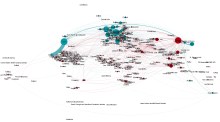
Josh Lepawsky’s work on “The changing geography of global trade in electronic discards” shows that over time, the global circulation of electronic waste is characterized by developing countries are exporting to developed nations. The data that lead to this analysis are now in an interactive format (cartograms) that allow viewers to see transactions 1996, and again in 2012.

Bringing Waste to Public Spaces: Discussion with Artist Keeley Haftner

Keeley Haftner’s public art, two shrink-wrapped bails of recyclable materials, was inspired by her time as a sort-liner at the city’s local recycling plant. Now vandalized, draped in a black tarp and bearing a sign that states, “Our tax dollars are for keeping garbage OFF the streets”, the installation has started a dialogue about waste and art in public spaces.

Modern Waste is an Economic Strategy

Industry developed disposability through planned obsolescence, single-use items, cheap materials, throw-away packaging, fashion, and conspicuous consumption. American industry designed a shift in values that circulated goods through, rather than into, the consumer realm. The truism that humans are inherently wasteful came into being at a particular time and place, by design.

Speculative Historiographies of Techno-Trash

The project asks: “what if we were required to physically store and care for our personal devices, such as cell phones and desktop computers, long after these machines served their intended function? In such an imaginary, unusable technologies remain within our sights, and in our sites.” They are asking people to submit their stories.

Why Discard Studies?

People tend to think that we are familiar with waste because we deal with it every day. Yet, this is not the case. Discard studies is central to thinking through and countering the initiative aspects of waste. As more popular, policy, activist, engineering and research attention is drawn to waste it becomes crucial for the humanities and social sciences to contextualize the problems, materialities and systems of waste that are not readily apparent to the invested but casual observer. Our task is to trouble the assumptions, premises and popular mythologies of waste so that work can go in a productive direction.

Misleading waste statistics

A comparison of national waste statistics shows undeniable differences between countries. However, such statistics are in many ways misleading and highlights differences that may actually not be there.

Myopic spatial politics in dominant narratives of e-waste

A new article by Josh Lepawsky argues against the popular notion that e-waste travels predominantly from ‘developed’ countries to ‘undeveloped’ countries, and what this change means for regulation and recycling practices.

Solutions to waste and the problem of scalar mismatches

Waste advocacy and popular environmentalism suffer from a constant mismatch of scales. Problems are at one scale, and solutions are at another. This article calls for shift in cultural discourses that include proportion and scale so that information, problem identification, and proposed solutions are able to intervene into problems in meaningful and effective ways.