Category Archives: Environment

“Article” alert- Beyond Passaic: Contamination, security threats, hobo encampments. A Meadowlands photo essay.

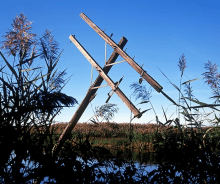
A stunning, melancholy, mysterious landscape ethnography has just been published by Triple Canopy. Triple Canopy supports non-traditional, multimedia “articles” particularly well suited to projects on waste, as “Beyond Passaic: Contamination, security threats, hobo encampments. A Meadowlands photo essay” proves. The artist-author Bryan Zanisnik walks through the no-man’s land of The Meadowlands, a combination of parks, […]
Read More »
Visual Culture of Food Waste Data: Theaters of Proof

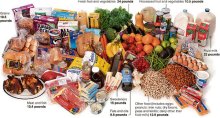
By Max Liboiron A lot of discard issues are about scale. Scale is expressed in functions of measurement or computation, yet scale is more than a quantitative sum. Scale is always relative (“bigger,” “smaller,” “less than,” “twice as much,” “a quarter of”), and therefore relational. So scale is not merely about being big or small. […]
Read More »

Space Trash and Space Fence: Exotic yet familiar waste

By Max Liboiron. A new article in Scientific American by John Maston, “On the Trail of Space Trash,”shows that our most exotic garbage has a lot in common with other forms of waste. His article explains one of the newer problems with space debris: it is multiplying. A September report by the National Research Council […]
Read More »

“Going Green but Getting Nowhere” — from the New York Times

Gernot Wagner, an economist with the Environmental Defense Fund, argues in this New York Times Op-Ed that our individual efforts to recycle, use less water, or replace plastic bags with cloth sacks are merely token gestures. “The changes necessary are so large and profound that they are beyond the reach of individual action,” he writes. […]
Read More »

Trash’s Competing Utopias

Our dominant waste management practices are decidedly utopic, takings the “no place” of utopia’s etymology quite literally. To create a “good place” of clean, disease-free municipalities, trash is exiled to “no place,” an ideal “away” that effects and troubles no one (except, as course, as environmental justice advocates tell us, someone– usually someones who are poor and part of minority communities– lives in “no place “).

Materials Flows in Cities: A Talk by Samantha MacBride

Wednesday, May 11 • 12:00 to 2:00 • 20 Cooper Square, 5th Floor • New York City Samantha MacBride has written eloquently and in-depth about the networks and relationships that keep an international flow of materials moving across the globe, particularly as these pertain to waste. In this talk, she focuses on the connection between […]
Read More »

A Question of Focus?

On April 7, the New York Academy of Sciences hosted a panel discussion called “Trash Talk: Options for Converting Our Solid Waste to Energy.” Nickolas Themelis of the Earth Engineering Center at Columbia University spoke about the many benefits of waste-to-energy, or WTE technologies. David Demme, with a company called SAIC Energy, Environment & Infrastructure, […]
Read More »

Discard Politics: How to Hijack a Moment of Hope

Tuesday, March 22, marked the tenth anniversary of the closing of Fresh Kills landfill on Staten Island (this piece from the New York Times describes the day the landfill closed). Its transformation into a park is well under way, but the scale of the project — 2200 acres across four massive hills — means that […]
Read More »

Dirt: The Filthy Reality of Everyday Life

The Wellcome Collection in London, part of the Wellcome Trust, opens an exhibit this Thursday, March 24, that explores changing attitudes toward dirt and cleanliness from the seventeenth century to the mid-21st. The show is built around specific examples in six different places — Delft, London, Glasgow, Dresden, New Delhi, and New York. It runs […]
Read More »

Defunct Models of Pollution: Starring Oceanic Plastics and Body Burdens

This entry is based on the premise that 20th century models of pollution can no longer describe or solve the problems of 21st century plastic pollution. What follows is meant to be an accessible introduction to this problem. Two scenarios first caught my attention and lead me to study plastic pollution. The first is that […]
Read More »