
Pollution is Colonialism
Colonialism in Canada is an ongoing structure whereby settler society and government assert sovereignty over lands already occupied by Indigenous peoples.
Colonialism in Canada is an ongoing structure whereby settler society and government assert sovereignty over lands already occupied by Indigenous peoples.

Notions of “sustainability” and “urban greening” ought to include values of justice and equity. Otherwise, important projects like the Blue Greenway will build sustainable waterfronts for the urban elite, rather than spreading the environmental benefits of toxic cleanup to the many.

Toxicity, toxins, and toxicants are areas of critical concern because controversies over what they mean, how they act, how they come into being and where, and what counts as evidence have high stake ramifications. These texts offer critical insights into these processes:

A reading list of the David and Goliath story of communities versus industries, governments, and polluting infrastructures.

Whether focused on toxicity, disease, disaster, violence, or malfunction, STS scholars have long studied harm. Given the great diversity of approaches and cases, this panel seeks to take an intersectional approach to theorizing harm.
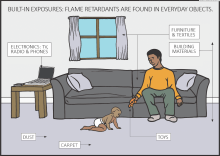
A new report highlights the failure of Canadian federal regulations to keep harmful flame retardant chemicals out of homes and consumer products. In fact, it argues that current regulations keep toxic chemicals *in* homes and bodies.

Deferring to molecules rather than social movements when it comes to contamination is a case of power relations.

Refusal is a method whereby researchers and research participants together decide not to make particular information available for use within the academy. Here are some strategies for identifying and collaborating with research refusals.

This bibliography is designed for professors who want to “teach Flint” in their classrooms. The Flint, Michigan water crisis is an extreme but quintessential case study that shows the intersections of environmental health, governance, the built environment, systemic racism, and social inequity.

Communicating invisible threats is an area of interest in discard studies because it requires distilling and articulating the ideas that matter most in our concepts of contamination and harm. I asked Yuko some questions about the background and choices behind the images for the Radiation Monitoring Project.

 Discard Studies