
Article Alert! New writing in discard studies
New articles in discard studies, from December 2016 to January 2017.

CFP: Theorizing Harm
Whether focused on toxicity, disease, disaster, violence, or malfunction, STS scholars have long studied harm. Given the great diversity of approaches and cases, this panel seeks to take an intersectional approach to theorizing harm.

Precision is not accuracy.
We often use the words precision and accuracy interchangeably in everyday conversation, but in statistics they mean different things.
Spotlight on Scholars: Rachele Dini and why the literature of waste matters
Between the age of seven and ten, I was obsessed with Barbie, and this playing spilled out far beyond my bedroom: it involved looking around the house, in the kitchen trash bin, and on the street for things my Barbies might need. Thus used bottle caps became plates and saucers. A ring box became a […]
Read More »

Top posts on the Discard Studies Blog in 2016
Thank you to our readers, authors, and supporters for a great 2016! We had over 136, 600 views from nearly 70,000 visitors this year! What were you reading? In reverse order, here are our top ten posts of 2016…
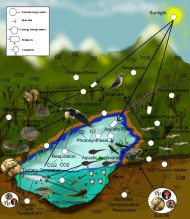
Bibliography for Critical Ecology
Since ecological metaphors, systems, and thinking are implicit to much of discard studies, we’re happy to share this crowdsourced bibliography on critical perspectives of ecology.

Victory at Standing Rock reflects a failure of US energy and climate policy
Stopping the pipeline in one spot, after all, won’t stop oil altogether. Climate change, however, is a threat most of all to Indigenous peoples around the world.

Bureaucrats and techies leading the pollution resistance against Trump
Some of Trumps efforts are literally to support and intensify environmental pollution, and some are efforts to make certain people disposable.
But people are fighting back. A lot of them are bureaucrats and techies.

Fracking, mining, murder: the killer agenda driving migration in Mexico and Central America
Why negotiate with poor Indigenous communities sitting atop valuable oil, water, wood and ore if they can be pushed off their land with hidden criminal, political and misogynistic forces?

More boys are diagnosed with cancer than girls worldwide – why?
The factors that lead to gender differences in cancer rates all affect us later in life, and should not apply to children. Yet the present data shows that more boys than girls are diagnosed with cancer worldwide.

 Discard Studies