
Criminal Negligence? (Part 2)
There is little evidence that transnational shipments of “e-waste” derive from attempts by exporters to elude strict environmental regulations and indicate rather that global flows are mainly driven by the quest for working or repairable secondhand devices, spare parts and recyclable materials.

Give the Gift of Waste this Christmas
As part of the European Week for Waste Reduction, Hubbub and the North London Waste Authority (NLWA) are hosting a range of £5 cooking session across seven North London boroughs to encourage people to turn their food waste into gifts.

DDT’s long shadow: Long-banned chemicals linked to abnormal sperm
A study of men from the Faroe Islands finds that high DDT and PCB exposure during adolescence and adulthood is associated with abnormal chromosomes in sperm. By Brian Bienkowski, EHN.

A Circular Economy? Disruptive Innovation Festival
What is the circular economy, exactly? Is it capitalism with better accounting? Is it about scaling up recycling and reuse? Is it about consuming less, and producing less, or consuming and producing fundamentally differently? Does it go so far as to advocate for a degrowth or steady state economy, where the loop on production and consumption is totally closed?

Roundtable reviews of “Banned: A History of Pesticides and the Science of Toxicology”
If you’re interested in the history of pesticides and toxicology, Banned provides a detail-oriented, close reading of key 20th century experiments, legislative hearings, events, and texts to investigate how scientific facts and legislative decisions about pesticides were made.
CFP: The Wastes of Governance (AAG 2016)
This session picks up on work that posits an understanding of waste as emergent, or as co-emerging alongside certain configurations of governance.
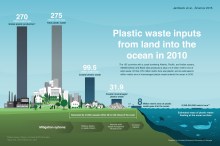
The Ocean Conservatory’s Call for Mass Incineration in Asia: Disposability for Profit, Fantasies of Containment, & Colonialism
The Ocean Conservatory would like to burn 80% of the waste in coastal Asia with US-made incinerators. According to a wide range of experts and grassroots organizations from around the world, that’s a problem.

The Power Behind Disposability: Why New York City’s ban on polystyrene was vilified, sued, and reversed
On July 1 New York City banned disposable Styrofoam containers. First they were sued over the decision, and last week the ban was overturned. What is the big deal? The answer, not surprisingly, is profit. Industry saves money through the creation of disposables. And disposables are only environmentally acceptable if they are recycled. Except they aren’t.

CFP: Who will queer political ecology? or Cute goners, (in)human thinkers, and queer wastoids. Oct 2 deadline
Ecological science, invited as queer tactic, can transfigure political ecology’s relations to and interchanges within the Anthropocene. Political ecology shares with queer theory an interest in the boundaries around ‘nature’; both sets of discourses challenge the naturalness of such categories as heterosexuality, hierarchy, and wilderness.

The Time of Landfills
Landfills partake of multiple temporal scales, making them difficult to regulate and run. Taking into account multiple timescapes, or polychronicity, reveals the constitutive role of non-human beings and forces in waste management generally. As a result, political challenges to landfills are limited if they fail to recognize landfill landscapes as a polychronic and multi-species affair.

 Discard Studies