
Misleading waste statistics
A comparison of national waste statistics shows undeniable differences between countries. However, such statistics are in many ways misleading and highlights differences that may actually not be there.
A comparison of national waste statistics shows undeniable differences between countries. However, such statistics are in many ways misleading and highlights differences that may actually not be there.
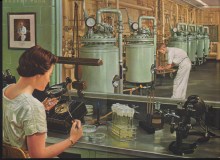
The petri dish was made for separation. As part of its ability to make separations between the contaminated world outside and the uncontaminated world inside, the dish also assisted in separating individuals from disease. These days, it’s getting harder for petri dishes to maintain these separations.
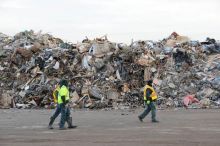
The following is a statement by John Doherty, Commissioner of the New York City Department of Sanitation, about the department’s response to Hurricane Sandy.
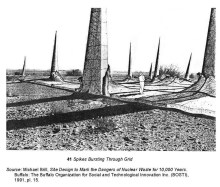
Galison argues that the categories of wastelands and wilderness are far from dichotomous; that their relation is far more intriguing (and disturbing) than a binary of purity and corruption. Removing parts of the earth in perpetuity – for reasons of sanctification or despoilment – alters a central feature of the human self, presenting us in a different relation to the physical world, and raising irreducible questions about who we are when land can be classified, forever, as not for us humans

What we perhaps did not realize, as we geared up our initial response, was how deep the partnerships between all stakeholders would become. As months went by and debris washed up piece by piece, the scenarios and plans turned to real action. The action became more routine and the coordination more efficient. What has happened, in the three years we have worked on this issue, is that we now have a solid network of marine debris responders in our Pacific states.

In effect, what I’m asking is what happens when we follow the ‘side-effects’ or discards of industry (in the literal and more metaphorical sense)? Do we bump into ‘collateral realities’ (Law, 2009) of Latour’s composed world? Do we arrive at the fractiverses of John Law (2011)? Or something else altogether? Or not at all?

What is it about our present—what forces, what infrastructures of global capital, conditions of planetary climate change, non-innocent affective economics—that provokes so many scholars to find the unformed phenomena, the phenomena open to change and already altered, everywhere?
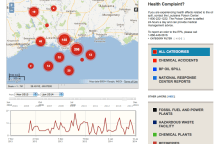
In early 2010 LABB introduced the iWitness Pollution Map to help Louisiana residents track pollution and associated health effects in their communities. Today there are over 11,000 reports of petrochemical pollution on the map. The iWitness Pollution Map is an open-source online map that allows anyone with a phone to document and share their experience with pollution via voicemail, text, email or by using the online form.

Despite San Francisco’s 80% diversion rate, the average person sends about 2.7 pounds per day to landfills. On a per person basis, it would seem that record-setting San Franciscans send roughly the same quantities to the dump as their friends in other places in the US. Samantha MacBride explains the logics behind these statistics.

By Zoltana Domotor, from If I was a Hoarder: On December 1, 2012 the board of trustees of the American Psychiatric Association approved the final diagnostic criteria for the fifth edition of the Diagnostic and Statistical Manual, due to be published in May 2013. Among the diagnoses new to the fifth edition of the manual […]
Read More »

 Discard Studies