In space, this is the age of reusability
It might seem that the obvious solution is to reuse rockets. The idea of Reusable Launch Vehicles (RLVs) isn’t new, but reusing rockets has proven tricky in the past.
It might seem that the obvious solution is to reuse rockets. The idea of Reusable Launch Vehicles (RLVs) isn’t new, but reusing rockets has proven tricky in the past.

How the Benzene Tree Polluted the World in The Atlantic by Rebecca Altman, is a narrative exploration of the rise of organic chemistry, and the industrialization of the branch of chemistry based on the benzene ring. The piece focuses on the geopolitical forces shaping the production and global distribution of PCBs, a class of industrial chemicals that, though […]
Read More »

Over the past 100 years, visual artists probably deserve the most credit for thrift shopping’s place in the cultural milieu.

These are admirable initiatives, but they only reduce wastage or delay garments from ending up in landfill. They do not address the fact that the scale of fast fashion is so massive it can easily eclipse other sustainability initiatives.

Thinking with virtual data demonstrates that reduction of material waste alone does not mean a reduction of an overall environmental footprint on this planet.

Newman’s activists press for environmental change imbedded with critiques of capitalism and industrialization, racial injustice, and its global implications. This view distorts the complexity of historical events within the environmental movement.

When in 1963 some farm animals in the parish of Smarden in Kent became sick and died, suspicions fell on a nearby pesticide factory run by a division of Rentokil Laboratories. The events that followed amounted to one of the first environmental scandals in contemporary British history – one that would galvanise the environmental movement.

A trench amphipod, Hirondellea gigas, from the deepest place on Earth: Challenger Deep in the Mariana Trench (10,890m). Alan Jamieson, Newcastle University, Author provided Alan Jamieson, Newcastle University Even animals from the deepest places on Earth have accumulated pollutants made by humans. That’s the unfortunate finding of a new study by myself with colleagues from […]
Read More »
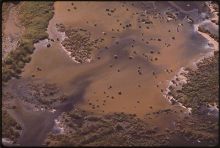
The workshop Hazardous Time-Scapes seeks to understand human-environment relationships through the lens of multiple overlapping time, space, and body regimes as they have (and continue to) play out in toxic landscapes.
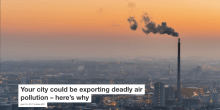
Goods and services produced in one region for use by another region are responsible for 22% (762,400) of air pollution-related deaths worldwide.

 Discard Studies