
Two newly launched open-access waste journals
There are two new open-access journals on waste: Worldwide Waste Journal of Interdisciplinary Studies and the Journal of Waste Management and Environmental Issues
There are two new open-access journals on waste: Worldwide Waste Journal of Interdisciplinary Studies and the Journal of Waste Management and Environmental Issues
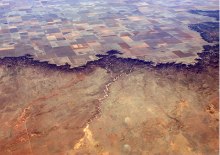
2017-18 Andrew W. Mellon Visiting Post-Doctoral Fellowship The Department of Jewish, Islamic, and Near Eastern Languages and Cultures (JINELC) at Washington University in St. Louis invites applications for a post-doctoral fellow to participate in a Mellon Sawyer Seminar, “Grounding the Ecocritical: Materializing Wastelands and Living on in the Middle East.” This one-year position begins on […]
Read More »
New articles in discard studies, from December 2016 to January 2017.

Whether focused on toxicity, disease, disaster, violence, or malfunction, STS scholars have long studied harm. Given the great diversity of approaches and cases, this panel seeks to take an intersectional approach to theorizing harm.
Thank you to our readers, authors, and supporters for a great 2016! We had over 136, 600 views from nearly 70,000 visitors this year! What were you reading? In reverse order, here are our top ten posts of 2016…
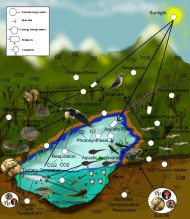
Since ecological metaphors, systems, and thinking are implicit to much of discard studies, we’re happy to share this crowdsourced bibliography on critical perspectives of ecology.

Some of Trumps efforts are literally to support and intensify environmental pollution, and some are efforts to make certain people disposable.
But people are fighting back. A lot of them are bureaucrats and techies.

Why negotiate with poor Indigenous communities sitting atop valuable oil, water, wood and ore if they can be pushed off their land with hidden criminal, political and misogynistic forces?

What does that mean? As an affront to order, it means we are pollution. It means we must be aggressively ignored, ordered, or erased. We know this. This is part of why so many of us have been grieving since Wednesday.

This special issue of ephemera aims to investigate contemporary practices of repair as an emergent focus of recent organizing at the intersection of politics, ecology and economy.

 Discard Studies