Category Archives: Difference: Class, Race, Gender

It Doesn’t Take a Fireman to Spot a Fire: Fighting Pollution with Citizen Science

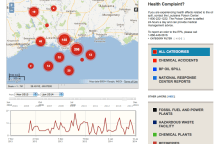
In early 2010 LABB introduced the iWitness Pollution Map to help Louisiana residents track pollution and associated health effects in their communities. Today there are over 11,000 reports of petrochemical pollution on the map. The iWitness Pollution Map is an open-source online map that allows anyone with a phone to document and share their experience with pollution via voicemail, text, email or by using the online form.
A Review of Infrapolitics: The Social Life of Water in Mumbai

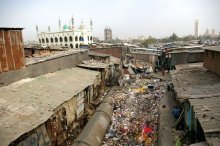
This review of Nikhil Anand’s dissertation, Infrapolitics: The Social Life of Water in Mumbai, written by Tarini Bedi, will be of interest to discard studies scholars because of the methodological approach and how it highlights the politics of infrastructure.

Hoarding Discourse in the Aftermath of Hurricane Sandy

A telling discourse of hoarding emerged in the immediate aftermath of the storm from relief distribution hubs that collected and freely distributed food, clothing, and other material goods to those in need. In these cases, the concept of “hoarding” highlighted the differences–and politics–between equitable and equal distributions of goods.

Body Burdens, Biomonitoring, and Biocitizenship

By Max Liboiron, Lindsey Dillon, and submitting authors. Since at least the publication of Silent Spring, scientists, policy-makers, and the general public has focused on pollution in the environment as the object of regulation and control, a source of fear and anxiety, and the subject of scientific testing. As technologies, analytical detection limits, and eco-populist, […]
Read More »

Chennai Waste, Part 2: The rural urban divide and caste politics

While most of my middle class informants have shied away from discussing caste, and instead point to class as being more of a social indicator in Chennai nowadays, Elango is insistent that “development and economics are masking the social, caste system.” Urbanization is just a process; caste is a system, a way of life so deeply entrenched that it has become taken for granted. This caste system entrenchment has in turn translated into not only a lack of empathy, but a sense that certain people belong or deserve certain tasks, such as clearing garbage, or waste picking. Elango’s words reminded me of a Ramky Group (a private company in charge of waste disposal for a few Chennai zones) street sweeper in Mylapore with whom I spoke in April, who echoed this idea that people don’t stop to think that someone is coming behind them to clean up the garbage they throw on the streets.

Twenty-first century nuisance law and the continued entanglement of race, gender, property, and violence

“It has generally been held that an in most instances rightly held that the degree of dilution necessary is merely that which will prevent a nuisance, having reference primarily to unsightly floating matter and bad odors. For most rivers and many of the smaller streams of the country, this requirement as to the cleanness of […]
Read More »

Race, Class, and Disaster Gentrification

By Zoltán Glück Originally published in Tidal on March 13, 2013 In the days and weeks following Hurricane Sandy the inequalities at the heart of New York City could scarcely be missed.  While hundreds of thousands of public housing residents went without heat, hot water or electricity, Mayor Michael Bloomberg rushed to get the stock […]
Read More »

Waste and Capitalism

Last night’s presentation of Surveying Waste and Capital at Trade School (NYC), lead by CUNY doctoral candidate Jesse Goldstein included a historical narrative starting in England during the enclosure movement and how the “wasteland,” originally referring to productive pasture and foraging land on the outskirts of a village’s agricultural fields, was reframed as “wasted spaces” […]
Read More »

Discards of an Exodus: Archeology at the US/Mexican Border

Archeologist Jason De Leon uses discards left through undocumented migration on the US/Mexico border to narrate the social, political, and geographical elements of one of the world’s largest ongoing modern-day migrations. The University of Washington has published a full length article about his work. In a small, cluttered office in Denny Hall, De Leon is […]
Read More »