Category Archives: Waste

A Cabinet of Curiosities for the Anthropocene

The Anthropocene is just one among many moments in time when new scientific objects have altered humanity’s relationship to the past, present, and future. Scientific objects such as fossils, radioactivity, genetic mutations, toxic pesticides, and ice cores, to name a few, have precipitated different narratives and imaginings of the human past and the human future. What might a cabinet of curiosities for the age of the Anthropocene look like?
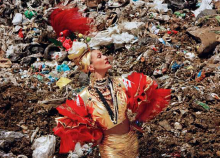
CFP: So-called waste’: Forms of Excess in Post-1960 Art, Film, and Literature

Visual art, film, and literature since 1960 has been marked by leftovers, repetitions, and time lags, despite emerging in a climate of accelerated technological development and the erasure of leisure time. From artworks that incorporate the trash and detritus of consumerist excess to novels and films that indulge in narrative ‘time-wasting,’ the cultural production of the last fifty years has revelled in the wasteful and excessive. This event asks: what are the aesthetics of excess?

Special edition on pharmaceuticals in the environment

In casual and professional conversations, people have been voicing their concerns that the environment is awash in pharmaceuticals. The Royal Society (Biology) has put together an special issue focusing on the issue. The provides an overview on the state of the knowledge around pharmaceuticals in the wild.

Grassroots Mappping: Waste

Public Lab publishes a magazine on “cutting edge techniques in hacking environmental science” called the Grassroots Mapping Forum, and the newest edition is on waste, highlighting waste methodologies that are accessible, inexpensive, and democratic: the premises of citizen science.

New Article! Toward a New Theory of Waste: From ‘Matter out of Place’ to Signs of Life

Josh Reno’s new article “Towards a New Theory of Waste: From ‘Matter out of Place’ to Signs of Life” is in November’s Theory, Culture and Society. In the article Reno proposes to re-orients the whole of “waste studies” by changing its object of interest, it’s operative metaphor, and the type of entities that create waste: “In this paper, I ask what it might mean for conceptions of waste, and critical theory more broadly, if we were to start from a different approach, bio-semiotics, modelled on an alternative substance, animal faeces” (2).

Top Ten Discard Studies posts

Discard Studies is four years old! Here are our top 10 posts of all time:

New Article! The Politics of Open Defecation

This paper examines the politics of open defecation by focusing on everyday intersections of the body and infrastructure in the metabolic city, which produces profoundly unequal opportunities for fulfilling bodily needs. Specifically, it examines how open defecation emerges in Mumbai’s informal settlements through everyday embodied experiences, practices and perceptions forged in relation to the materialities of informality and infrastructure.

Article Alert! Adjudicating Deep Time: Revisiting the United States’ High-Level Nuclear Waste Repository Project at Yucca Mountain

This paper draws upon perspectives on legal personhood, expert knowledge practices, and social relations influential in STS and anthropology to revisit the legal procedural framing of the United States’ now-defunct high-level nuclear waste repository project at Yucca Mountain.

Interactive Visualization of the Global Flow of Electronic Waste

Josh Lepawsky’s work on “The changing geography of global trade in electronic discards” shows that over time, the global circulation of electronic waste is characterized by developing countries are exporting to developed nations. The data that lead to this analysis are now in an interactive format (cartograms) that allow viewers to see transactions 1996, and again in 2012.

Modern Waste is an Economic Strategy

Industry developed disposability through planned obsolescence, single-use items, cheap materials, throw-away packaging, fashion, and conspicuous consumption. American industry designed a shift in values that circulated goods through, rather than into, the consumer realm. The truism that humans are inherently wasteful came into being at a particular time and place, by design.