Category Archives: Waste

Wall Dogs

Writing for Biz Journals, Michael DeMasi reports on Albany, New York’s efforts to preserve fading advertisements on the sides of city buildings. As part of Albany’s Sculpture in the Streets exhibit (sponsored by the Downtown Albany Business Improvement District), the work of 19th and early 20th century “wall dogs” (muralists who adorned buildings with colorful […]
Read More »

Not scrap metal

“The past…is constantly being broken down and reintegrated into the present…” (Lucy Lippard, The Lure of the Local, p.85). This is a photograph I took recently of the twisted, rusted metal that forms the centerpiece of the memorial park in the small New Jersey town I live in.  Surrounded by greenery, the monolithic steel was […]
Read More »

Don’t save the contradictory seals

“In the end, the biggest problem with green consumerism may be that it acts as a smokescreen, creating the impression that people are taking environmental issues seriously while allowing them to continue their lives as usual.” Lee and English 2011 While promoting the sales of building products for the construction industry, the greenproducts website features […]
Read More »

Shifting the Burden of Recycling: Yale Journal Explores the State of Extended Producer Responsibility

Via Reid Lifset, editor of Journal of Industrial Ecology (JIE): Over the past two decades governments around the world have been experimenting with a new strategy for managing waste.  By making producers responsible for their products when they become wastes, policy makers seek to significantly increase the recycling­-and recyclability­-of computers, packaging, automobiles, and household hazardous […]
Read More »

Trash Dance

By Max Liboiron. “When I got to get the stuff in the bucket, first I go down the far left edge of the pile, dump it in. Then I go down the far right side of the pile, dump it in. Then I go down the middle. So everything fits in the back of the […]
Read More »

The Politics of Measurement: Per Capita Waste and Previous Sewage Contamination

By Max Liboiron. Measurements are never mere faithful representations of nature, but have social and political origins and ramifications. In representational theory, measurement is “the correlation of numbers with entities that are not numbers,” a process of transformation, translation, and even interpretation at the level of sampling and gathering data. What is selected for measurement and what is […]
Read More »

How to picture two tons of waste? Trashy theaters of proof.

Basurama (trash-o-rama), a non profit organization based in Spain, is preparing a public waste audit for MIT’s Media Lab Festival on April 20th. Their unique point of intervention that goes above and beyond a regular waste audit and the goal of quantification and classification of waste,  is how to represent two tons of waste. Basurama […]
Read More »

Connecting knowledge about discards to life-saving solutions

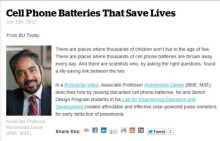
In this short video found on the Boston University website, Professor Zaman explains how he and his students use discards to save lives.  He is driven by a desire to connect knowledge to real-world solutions for those in developing countries. As part of a classroom project, engineering students at BU sought to improve conditions for […]
Read More »

Critical Development in the History of Hoarding

By Zoltana Domotor, from If I was a Hoarder: On December 1, 2012 the board of trustees of the American Psychiatric Association approved the final diagnostic criteria for the fifth edition of the Diagnostic and Statistical Manual, due to be published in May 2013. Among the diagnoses new to the fifth edition of the manual […]
Read More »

Everyday xenogarbology: Space Dust

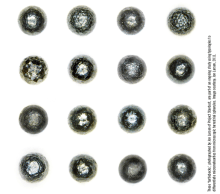
By Max Liboiron. One of the central tensions in discard studies is the othering and externalizing of  waste that originates in often intimate and everyday spaces and processes. This tension is maintained via material infrastructure (see, for example, Jennifer Clapp’s “The Distancing of Waste” or Coverly’s “Hidden Mountain“) and social), taboo (see Douglas’ Purity and Danger, or Inglis’ […]
Read More »