
Community Responses to Toxic Hazards: A Reading List
A reading list of the David and Goliath story of communities versus industries, governments, and polluting infrastructures.
A reading list of the David and Goliath story of communities versus industries, governments, and polluting infrastructures.
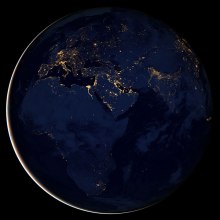
By Dr. Sara B. Pritchard Department of Science & Technology Studies, Cornell University So it began. This was the image that sparked my interest in light pollution and light-pollution science (Figure 1). The National Aeronautics and Space Administration released new images of Earth at night, including this one, on December 5, 2012, at the annual meeting […]
Read More »

This special issue attempts to open up the categories of social thought to a deeper understanding of earth processes.

by Lina Dib Originally published in continent 6(1) CC BY 2.0 DOWNLOAD PDF (https://soundcloud.com/continent/lina-dib-sonic-breakdown-extinction-and-memory) This soundtrack features sounds of environmental as well as technological extinction. Of course, one cannot speak of extinction without first addressing a breakdown of sorts, a breakdown of what was once sustainable. Restoration ecology seeks to reverse damage brought on to ecosystems […]
Read More »

The concept of citizenship originally described inhabitants of (probably walled) towns. Some insistence on specificity of place certainly remains, although the concept today generally refers to nations rather than cities. But what are concerned citizens to do in the face of problems such as climate change, which cannot easily be contained by walls or borders, and to which we all contribute?

Both Todd and Whyte argue that achieving climate justice for and by Indigenous people requires addressing the ways in which global environmental change is intimately connected with— and in fact is predicated upon— practices of settler colonialism.
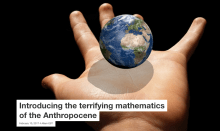
In 2000, Nobel laureate Paul Crutzen and Eugene Stoermer proposed that human impact on the atmosphere, the oceans, the land and ice sheets had reached such a scale that it had pushed Earth into a new epoch. They called it the Anthropocene and argued the current Holocene epoch was over.
When reflecting on these intertwined day-to-day, multi-decade, centurial, and multi-millennial horizons of nuclear waste risk all at the same time, a different set of sensibilities emerges. Namely, it becomes evident how relatively short-term events like unanticipated deaths, retirements of key experts, obsolescence of information storage technologies, and surprise career-changes can potentially shake nuclear waste management projects’ stabilities.

The forces arrayed against Donald Trump’s presidency in the US could soon encompass most of the world once Trump’s climate change threats meet resistance.

Stopping the pipeline in one spot, after all, won’t stop oil altogether. Climate change, however, is a threat most of all to Indigenous peoples around the world.

 Discard Studies