
Trump may reverse US climate policy but will have trouble dismantling EPA
History suggests that it may be harder to make radical cuts at EPA than Trump and his advisors think. While many politicians have called for eliminating entire cabinet agencies, none has succeeded.

In Trump’s America, 72% of the population is disposable
What does that mean? As an affront to order, it means we are pollution. It means we must be aggressively ignored, ordered, or erased. We know this. This is part of why so many of us have been grieving since Wednesday.

CFP: Repair Matters
This special issue of ephemera aims to investigate contemporary practices of repair as an emergent focus of recent organizing at the intersection of politics, ecology and economy.

CFP: Indigenous resurgence, Decolonization, and Movements for Environmental Justice
This volume of Environment and Society aims to set forth a theoretical and discursive interruption of the dominant environmental justice movement by reframing issues of climate change and environmental degradation through an anti-colonial lens. Specifically, we are interested in positioning environmental justice within historical, social, political, and economic contexts and larger structures of power that foreground the relationships among settler colonialism, nature, and planetary devastation.

Discard Studies Article Alerts for October!
Since discard studies doesn’t (yet!) have its own journal, conference, or department, Discard Studies publishes a regular table of contents alerts for articles, reports, and books in the field. If you are interested in becoming an editor for non-English article alerts on Discard Studies, or know of a recent article for the next article alert, please contact […]
Read More »
Call for Fellows: Rachel Carson Center for Environment and Society
The Rachel Carson Center for Environment and Society invites applications for its 2017-18 cohort of postdoctoral and senior fellows. The RCC’s fellowship program is designed to bring together excellent scholars who are working in environmental history and related disciplines.
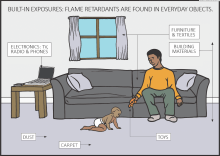
How toxic flame retardant chemicals become-and stay-ubiquitous in our homes and bodies
A new report highlights the failure of Canadian federal regulations to keep harmful flame retardant chemicals out of homes and consumer products. In fact, it argues that current regulations keep toxic chemicals *in* homes and bodies.

Dumping Milk from the Treadmill of Production
Over 43 million gallons of milk has been dumped into manure pits and fields the first eight months of 2016. There is too much of it. Yet milk is only the most recent commodity to become waste in an economic system that depends on waste. The Treadmill of Production refers to the processes by which industrial systems achieve consistent growth, and waste plays a central role.
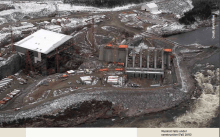
On Solidarity and Molecules (#MakeMuskratRight)
Deferring to molecules rather than social movements when it comes to contamination is a case of power relations.
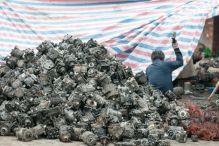
CFP: The moving boundaries of recycling in and beyond China
The moving boundaries of recycling in and beyond China AAS-in-Asia Conference Asia in Motion: Beyond Borders and Boundaries Seoul, 24-27 June 2017 Note: deadline in 10 days Recycling (understood here in a broad sense) played a key role in China’s economic development since the late 1970s. It has undergone major changes in recent years, the most significant of which […]
Read More »

 Discard Studies