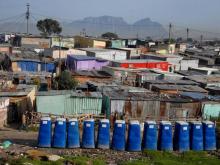
Reconciliation’s Waste: heritage and waste in post-apartheid South Africa
Portable toilets and urine on colonial era statues are reconciliations ruins, the things leftover that heritage helps to frame but yet cannot fully explain. As matter that remains unresolved, I think it tells us about the unfinished work of reconciliation in South Africa.
CFP: Towards an ecology of neglected things
Neglected things are pervasive in numerous contemporary practices and imaginaries. Our patchy knowledge about them is co-produced with a specific social order (Jasanoff, 2004), which is politically shortsighted, negates materiality and environmental issues, and reduces the creativity of practices.
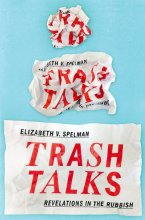
Article Alert! Table of Contents for new texts in Discard Studies
Since discard studies doesn’t have its own journal, conference, or department, Discard Studies publishes a regular table of contents alerts for articles, reports, and books in the field. There are the most recent publications as of the end of April, 2016: Barnard, Alex. (2016). Freegans: Diving into the Wealth of Food Waste in America. University of […]
Read More »

Thompson on Sills, ‘Toxic War: The Story of Agent Orange’
The use of the defoliant Agent Orange by the United States is one of the most controversial actions of the Vietnam War. InToxic War: The Story of Agent Orange, Peter Sills provides much-needed clarity to the history of Agent Orange with his use of data made available by legal proceedings.
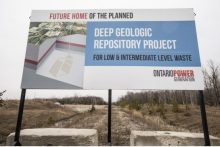
CFP: Timescales
Timescales explores the question of temporality in ecological crisis. Timescales is an interdisciplinary environmental humanities conference to be held on October 20-22, 2016 at the University of Pennsylvania.
Environmental historians get wasted: ASEH conference report
What’s my take on this torrent of waste at ASEH? I think it really signals a maturation of a second generation of waste scholarship in environmental history that began in the early 2000s.

CFP: Libraries and Archives in the Anthropocene: A Colloquium
As stewards of a culture’s collective knowledge, libraries and archives are facing the realities of cataclysmic environmental change with a dawning awareness of its unique implications for their missions and activities.

Nutrient Rifts
The nineteenth-century critique of the emerging “metabolic rift” between city sewers and country farms lamented that with the rise of the sanitary metropolis and the emergence of input-intensive agriculture in Europe and North America, products that had formerly connected urban and rural nutrient cycles were reclassified as waste.

Bibliography on Action-Based Research Methods
As researchers, we often want to make material and social changes through our work. Regardless of our institutional affiliations and disciplines, there are concrete ways to achieve this, many of which are not taught in traditional university methods courses.

Refusal as Research Method in Discard Studies
Ethnographic refusal is a practice by which researchers and research participants together decide not to make particular information available for use within the academy. Its purpose is not to bury information, but to ensure that communities are able to respond to issues on their own terms.

 Discard Studies