
An ethics of surplus and the right to waste?: Discards and Degrowth
What would happen if we paired an ethics of surplus, where accumulation was always temporary and not the goal of economic production, with processes of wasting that enacted social values? In this situation, we might have a right to waste.

Bibliography on Space Trash & Orbital Debris
From tiny flakes of paint to defunct satellites, there is increasing attention to the space debris that orbits the Earth and exists on other planets. This bibliography provides a range of articles, interviews, and reports on the increasingly dire case of orbital debris.

Temporality and Waste: Slow Violence
The distribution of environmental damage in time as well as space is a key aspect of this problem, one not always recognized in the oft-invoked notion of pollution as “matter out of place.”

A Visit to a Waste-to-Energy Facility: Notes from central Austria’s industrial fields
“All this actually works. I mean there was so much that we didn’t know, that we still don’t know. There were so many mistakes that the industry made at the beginning. Look at Vienna, where there were some really, really bad mistakes in the 1980s. There was so much planning and preparation and calculation that went into this – and it really just works. My wish is simply for it to just be able to keep working as it has been.”

Visually Representing Slow Disasters
Slow violence and chronic disasters create a representational challenge. How do you visualize a non-event so that it imparts the severity of the problem without turning it into an event?
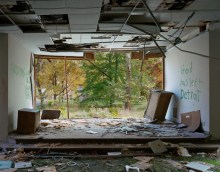
The Perils of Ruin Porn: Slow Violence and the Ethics of Representation
The main argument against cinematic, photogenic images of ruination is that they can work against revitalization, and obscure systemic problems that cause certain patterns of ruination and harm.

Discard Studies at the Association of American Geographers Conference (April 2015)
This year the AAG’s annual meeting is in Chicago from April 21-25. The schedule shows that presentations on discard studies at an all time high.
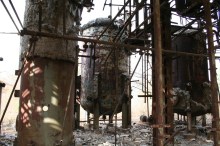
Sizing Up ‘Slow Violence’
If a key challenge of slow violence is how to adequately represent it so that it may be investigated, opposed, and redressed why represent its power as more formidable than it already is? There is poetry in the law, but legal personhood for corporations is not magic. It’s infrastructure.

Introduction to Rob Nixon’s Slow Violence and the Environmentalism of the Poor
Rob Nixon’s book shows how the invisible, destructive impacts of neoliberalism stretch across vast spatial and temporal scales. Within this history, profits are internalized and risks exacerbated as they are offloaded on poor communities.
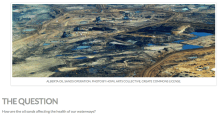
Researcher Activism: The Gutting of Discard Science in Canada and the Write2Know Campaign
Being able to identify the materials in waste, its location, and its effects are the first steps in making decisions about waste. But all three of those abilities have been “gutted” by the Canadian federal government’s “war on science.”

 Discard Studies