Why Discard Studies?
People tend to think that we are familiar with waste because we deal with it every day. Yet, this is not the case. Discard studies is central to thinking through and countering the initiative aspects of waste. As more popular, policy, activist, engineering and research attention is drawn to waste it becomes crucial for the humanities and social sciences to contextualize the problems, materialities and systems of waste that are not readily apparent to the invested but casual observer. Our task is to trouble the assumptions, premises and popular mythologies of waste so that work can go in a productive direction.

New report on Race, Poverty, and Chemical Disasters
The report, called “Who’s in Danger? Race, Poverty, and Chemical Disasters,” sought to examine who lives in “fenceline” neighborhoods adjacent to large chemical plants. The report said those residents were more likely to be black or Latino and have lower home values, incomes and education levels than average Americans.
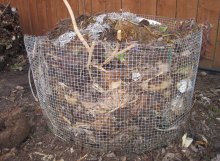
Special issue of Green Letters on junk and composting
Green Letters: Studies in Ecocriticism is a journal that explores the relationship between literary, artistic and popular culture and concepts of the environment. They are concerned with aesthetics, metaphors, representations and rhetorics of waste in their newest special issue dedicated to “junk and composting.”

Misleading waste statistics
A comparison of national waste statistics shows undeniable differences between countries. However, such statistics are in many ways misleading and highlights differences that may actually not be there.
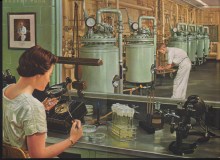
Petri Dish
The petri dish was made for separation. As part of its ability to make separations between the contaminated world outside and the uncontaminated world inside, the dish also assisted in separating individuals from disease. These days, it’s getting harder for petri dishes to maintain these separations.
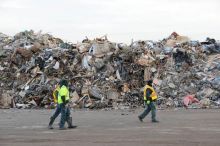
Commissioner of NYC’s Department of Sanitation on Hurricane Sandy
The following is a statement by John Doherty, Commissioner of the New York City Department of Sanitation, about the department’s response to Hurricane Sandy.
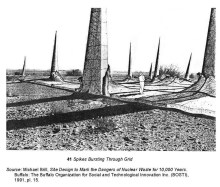
Waste-Wilderness: A Conversation between Peter Galison and Smudge Studio
Galison argues that the categories of wastelands and wilderness are far from dichotomous; that their relation is far more intriguing (and disturbing) than a binary of purity and corruption. Removing parts of the earth in perpetuity – for reasons of sanctification or despoilment – alters a central feature of the human self, presenting us in a different relation to the physical world, and raising irreducible questions about who we are when land can be classified, forever, as not for us humans

Where Are We Now? Tsunami Debris Three Years Later
What we perhaps did not realize, as we geared up our initial response, was how deep the partnerships between all stakeholders would become. As months went by and debris washed up piece by piece, the scenarios and plans turned to real action. The action became more routine and the coordination more efficient. What has happened, in the three years we have worked on this issue, is that we now have a solid network of marine debris responders in our Pacific states.
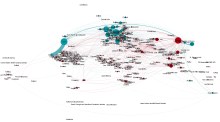
Myopic spatial politics in dominant narratives of e-waste
A new article by Josh Lepawsky argues against the popular notion that e-waste travels predominantly from ‘developed’ countries to ‘undeveloped’ countries, and what this change means for regulation and recycling practices.
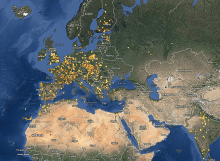
Crowdsourcing light pollution data: A means of infrastructure awareness?
The Globe at Night project is an international citizen-science campaign to measure the impact of light pollution. It invites citizen-scientists (aka: you) to measure their night sky brightness and submit their observations from a computer or smart phone. Yet, gathering information for a scientific project is really a side effect of the goals of the project, which is to raise awareness of the problem. While my views on awareness campaigns tend toward the critical, in many ways this is a campaign for infrastructural awareness.

 Discard Studies