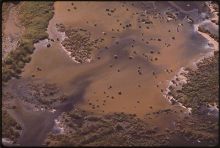
CfP: Hazardous Time-Scapes: How to Make Sense of Toxic Landscapes from Multiple Timed, Spaced, and Embodied Perspectives?
The workshop Hazardous Time-Scapes seeks to understand human-environment relationships through the lens of multiple overlapping time, space, and body regimes as they have (and continue to) play out in toxic landscapes.
Your city could be exporting deadly air pollution – here’s why
Goods and services produced in one region for use by another region are responsible for 22% (762,400) of air pollution-related deaths worldwide.
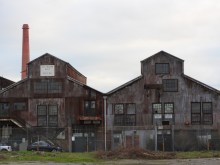
Cleaning up toxic sites shouldn’t clear out the neighbors
Notions of “sustainability” and “urban greening” ought to include values of justice and equity. Otherwise, important projects like the Blue Greenway will build sustainable waterfronts for the urban elite, rather than spreading the environmental benefits of toxic cleanup to the many.
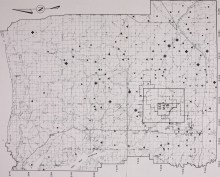
CPF: Shifting Baselines, Altered Horizons: Politics, Practice, and Knowledge in Environmental Science and Policy
Workshop – Call for Papers Shifting Baselines, Altered Horizons: Politics, Practice, and Knowledge in Environmental Science and Policy Max Planck Institute for the History of Science (MPIWG) Berlin, Germany – 21-22 June 2018 Convenors: Wilko Graf von Hardenberg (MPIWG, Germany), Thomas Lekan, (University of South Carolina, USA), Sebastián Ureta, (Universidad Alberto Hurtado, Chile) Description […]
Read More »

We can’t recycle our way to ‘zero waste’
Why is recycling low on the waste hierarchy?
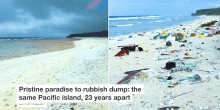
Pristine paradise to rubbish dump: the same Pacific island, 23 years apart
Remember, this is not waste that was dumped directly by human hands. It was washed here on ocean currents, meaning that this is not just about one beach – it shows how much the pollution problem has grown in the entire ocean system in little more than two decades.

Bibliography on critical approaches to toxics and toxicity
Toxicity, toxins, and toxicants are areas of critical concern because controversies over what they mean, how they act, how they come into being and where, and what counts as evidence have high stake ramifications. These texts offer critical insights into these processes:

Community Responses to Toxic Hazards: A Reading List
A reading list of the David and Goliath story of communities versus industries, governments, and polluting infrastructures.

On (not) seeing artificial light at night: Light pollution or lighting poverty?
By Dr. Sara B. Pritchard Department of Science & Technology Studies, Cornell University So it began. This was the image that sparked my interest in light pollution and light-pollution science (Figure 1). The National Aeronautics and Space Administration released new images of Earth at night, including this one, on December 5, 2012, at the annual meeting […]
Read More »

Reorganized Organ: youth mentorship project
Are you an artist, musician, hacker, tinkerer, or generally a curious person, between 18 and 24 years?

 Discard Studies