
Recycling Reconsidered: A must-read text for discard studies
If I could only recommend one text in discard studies, it would be Recycling Reconsidered by Samantha MacBride (2011, MIT Press).

Powerful supermarkets push the cost of food waste onto suppliers, charities
Our research into the issue of corporate social responsibility and wastage of fresh fruit and vegetables has identified a number of tensions and contradictions, despite leading Australian supermarkets’ zero food waste targets.

Special Issue Alert! Geosocial Formations and the Anthropocene in Theory, Culture & Society
This special issue attempts to open up the categories of social thought to a deeper understanding of earth processes.

Community repair: a pop-up alternative to the throwaway society
Consumers, fed up with having to throw away broken phones, toasters and other appliances, are instead meeting to learn how to repair them and to extend the lifetime of their products. These repair “pop-up parties”, where like-minded people can improve or learn new skills in a supportive environment, can prevent still-useful products from ending up in the bin, while saving money.

Sonic Breakdown, Extinction and Memory
by Lina Dib Originally published in continent 6(1) CC BY 2.0 DOWNLOAD PDF (https://soundcloud.com/continent/lina-dib-sonic-breakdown-extinction-and-memory) This soundtrack features sounds of environmental as well as technological extinction. Of course, one cannot speak of extinction without first addressing a breakdown of sorts, a breakdown of what was once sustainable. Restoration ecology seeks to reverse damage brought on to ecosystems […]
Read More »

Repair and Software: Updates, Obsolescence, and Mobile Culture’s Operating Systems
What is the role of software in planned obsolescence and waste? It may play a greater role than hardware…

Beyond breakdown: Exploring Regimes of Maintenance
Mending, repairing, fixing, restoring, preserving, cleaning, recycling, up-keeping… an immense variety of more or less noticeable practices take part in the maintenance of objects, technologies and infrastructures. In this article we would like to make a first step into questioning such diversity. How can we understand the differences in the ways things are taken care of? What can we learn from the variety of justifications for objects to be mended, fixed, patched up, or patiently restored? In which conditions are these operations considered as important or negligible?

Repair-scapes
How might thinking through repair in terms of space change how we think about – and practice – repair? In what follows, we describe four cases from our research projects that highlight the spatialities of repair.

Special Issue of Continent: “R3pair Volume”
Repair and waste share many points of convergence from an analytical perspective (as well as a practical one!). Continent has just released a special issue all about repair:
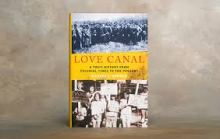
Review of ‘Love Canal: A Toxic History from Colonial Times to the Present’
Richard S. Newman’s recent book offers a new history of Love Canal, the neighborhood near Niagara Falls that became notoriously contaminated by buried chemical waste. As residents became aware of the leaching chemicals and associated health risks, they organized to investigate the problems and demand government action.

 Discard Studies