Category Archives: Aesthetics

Bibliography on Noise Pollution

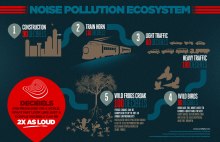
If waste is, broadly defined, the externalities of social and technical systems, then noise is a quintessential form of waste. Noise pollution is disturbing or excessive sound that may harm humans or animals, and, not surprisingly, it usually emits from industrial technologies. Perhaps because it exceeds the material fetish of most pollution laws, it wasn’t until the 1970s (1975 in Portland, to be exact) that U.S. governments promoted noise from a “nuisance” to f a full fledged environmental problem like its material cousins in the pollution panoply. Yet, noise remains a generally neglected source for the theorization of waste, pollution, and harm. If you are interested in remedying the situation, here is a bibliography for you:

Arrested Decay: The Exorcism of an American Ghost Town

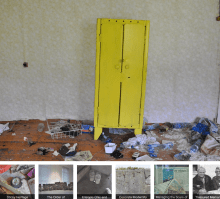
Bodie, California is a ghost town. Or rather, it was a ghost town—now it is a historic park and tourist destination. It endures in a state of “arrested decay,” meaning that nothing can be newly constructed onsite, but neither are its standing buildings permitted to deteriorate any further. The state of California has suspended the town in its process of ruination, stabilizing its entropy and halting its decline. If its decay is forestalled, its grounds rigorously maintained and its aesthetic carefully cultivated, can it be called a ghost town any longer?

The Decompository at the Arnold Arboretum

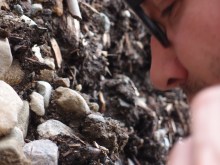
Most Arboretums don’t put their dirt, waste, and decomposition on visitor maps. In July, via a workshop on Digital STS at Boston’s Arnold Arboretum, we fixed that. We created “The Decompository” for the Arboretum. The Decompository cataloged the entire, often dirty, frequently smelly, certainly decomposing urban ecology of the park could be made more apparent for visitors and researchers.

Ruin Memories Portfolio online

Numerous studies have focused on modernity’s destructive effect on traditional life- worlds, the desertion of villages and the ruination of rural areas. However, the fact that the modern condition also produces its own ruined materialities, its own marginalized pasts, is less spoken about. Since the 19th century, mass-production, consumerism and thus cycles of material replacement […]
Read More »

Inventive repair, or, the aesthetics of material hacks

Before disposability, before planned obsolescence, and even before mass production really entered its modern phase, there reined a different kind of material relation with broken objects. Waste historian Susan Strasser calls this ethos “stewardship,”  characterized by handwork, repair, and making do: “We are not likely to revive the stewardship of objects and materials, formed in […]
Read More »

Litterati: A Digital Landfill of Good-Looking Trash

By Max Liboiron. I suspect, that like me, urban followers of the Discard Studies blog spend a lot of time looking down. There is a lot of interesting trash on sidewalks, roads, and gutters, and now there is a place to share your awareness with the world (provided you have a smart phone): Litterati, the […]
Read More »

The Atemporality of “Ruin Porn”: The Carcass & the Ghost by Sarah Wanenchak

*This post originally appeared on Cyborgology. Objects have lives. They are witness to things. –This American Life, “The House on Loon Lake” Atlantic Cities’ feature on the psychology of “ruin porn” is worth a look–in part because it’s interesting in itself, in part because it features some wonderful images, and in part because it has […]
Read More »

Detritus from Historic Deadhorse Bay: Trash Meant to be Left Behind

By Max Liboiron A long, long time ago, a younger, grubbier New York City dumped its trash on Barren Island off the south shores of Brooklyn. Barren Island was its own self-contained community and had a one-room school house, four saloons, and five factories boiling garbage all day, everyday. The buildings and island inhabitants–mostly immigrant […]
Read More »

Relics and ruins from our industrial past

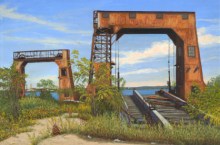
Yes, that’s a painting! Long ago (and on into today), explorers and anthropologists sought to capture images of the disappearing worlds they found.  Similarly, Artist Valeri Larko memorializes (on canvas) the ruins and structures of the everyday disappearing urban/industrial landscapes around her. Her bio records that she is “best known for her densely painted landscapes of […]
Read More »

Seduction of the instantaneous

By Robin Nagle. There’s something to be said for deep engagement.  I agree with Wolfgang Iser, the literary theorist and co-founder of the sub-discipline of literary anthropology, who argued passionately that focused engagement with a text can truly transform the reader (see The Act of Reading).  Although Iser was mostly concerned with works of literature, his theory […]
Read More »