Category Archives: Archives

Sonic Breakdown, Extinction and Memory

by Lina Dib Originally published in continent 6(1) CC BY 2.0 DOWNLOAD PDF (https://soundcloud.com/continent/lina-dib-sonic-breakdown-extinction-and-memory) This soundtrack features sounds of environmental as well as technological extinction. Of course, one cannot speak of extinction without first addressing a breakdown of sorts, a breakdown of what was once sustainable. Restoration ecology seeks to reverse damage brought on to ecosystems […]
Read More »

An Introduction to Hoarding

One the one hand, hoarding is framed as a response to material deprivation. On the other, it is understood to result from the excesses of the late capitalist mode of production.

Bibliography on Action-Based Research Methods

As researchers, we often want to make material and social changes through our work. Regardless of our institutional affiliations and disciplines, there are concrete ways to achieve this, many of which are not taught in traditional university methods courses.

“The Dregs of the Library”: Trashing the Occupy Wall Street Library

When our library at Occupy Wall Street was destroyed, we used our beloved books tactically, as evidence, and then used the trauma of destruction to make a case for the illegitimacy of the violence committed when the library was destroyed. How do we voice and give and hear testimony when things we care for that are discarded?

Commissioner of NYC’s Department of Sanitation on Hurricane Sandy

The following is a statement by John Doherty, Commissioner of the New York City Department of Sanitation, about the department’s response to Hurricane Sandy.

Trash, debris, or neither? The Nature of Waste During Disaster

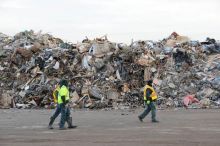
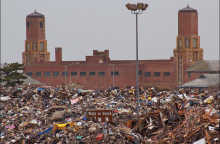
Not only do natural (and unnatural) disasters produce a lot of waste, they are also extreme but oddly quintessential events where practices, behavior, and cultures around waste and wasting, as well as their inverse–repairing, fixing, rebuilding–move to the fore. In the weeks proceeding and following the one year anniversary of Hurricane Sandy making landfall in New York City and surrounding area, Discard Studies will feature a series of articles about the complexities of disaster and waste, broadly defined. This article looks at the material and emotional nature of waste during disaster.

The Decompository at the Arnold Arboretum

Most Arboretums don’t put their dirt, waste, and decomposition on visitor maps. In July, via a workshop on Digital STS at Boston’s Arnold Arboretum, we fixed that. We created “The Decompository” for the Arboretum. The Decompository cataloged the entire, often dirty, frequently smelly, certainly decomposing urban ecology of the park could be made more apparent for visitors and researchers.

Inventive repair, or, the aesthetics of material hacks

Before disposability, before planned obsolescence, and even before mass production really entered its modern phase, there reined a different kind of material relation with broken objects. Waste historian Susan Strasser calls this ethos “stewardship,”  characterized by handwork, repair, and making do: “We are not likely to revive the stewardship of objects and materials, formed in […]
Read More »

Litterati: A Digital Landfill of Good-Looking Trash

By Max Liboiron. I suspect, that like me, urban followers of the Discard Studies blog spend a lot of time looking down. There is a lot of interesting trash on sidewalks, roads, and gutters, and now there is a place to share your awareness with the world (provided you have a smart phone): Litterati, the […]
Read More »

The Atemporality of “Ruin Porn”: The Carcass & the Ghost by Sarah Wanenchak

*This post originally appeared on Cyborgology. Objects have lives. They are witness to things. –This American Life, “The House on Loon Lake” Atlantic Cities’ feature on the psychology of “ruin porn” is worth a look–in part because it’s interesting in itself, in part because it features some wonderful images, and in part because it has […]
Read More »