Category Archives: Recycling

The Power Behind Disposability: Why New York City’s ban on polystyrene was vilified, sued, and reversed

On July 1 New York City banned disposable Styrofoam containers. First they were sued over the decision, and last week the ban was overturned. What is the big deal? The answer, not surprisingly, is profit. Industry saves money through the creation of disposables. And disposables are only environmentally acceptable if they are recycled. Except they aren’t.

How the Ocean Cleanup Array Fundamentally Misunderstands Marine Plastics and Causes Harm

The road to hell is paved with good intentions. The Ocean Cleanup array, designed to clean plastics from the ocean like a baleen whale, is one of these good intentions: experts in marine plastics, including myself, say it’s a bad idea.Technological fixes like the Array do harm to the larger project of ending plastic pollution, which is a complex social, environmental, and economic problem. It is also going to damage and kill marine life.

Interactive Visualization of the Global Flow of Electronic Waste

Josh Lepawsky’s work on “The changing geography of global trade in electronic discards” shows that over time, the global circulation of electronic waste is characterized by developing countries are exporting to developed nations. The data that lead to this analysis are now in an interactive format (cartograms) that allow viewers to see transactions 1996, and again in 2012.

Bringing Waste to Public Spaces: Discussion with Artist Keeley Haftner

Keeley Haftner’s public art, two shrink-wrapped bails of recyclable materials, was inspired by her time as a sort-liner at the city’s local recycling plant. Now vandalized, draped in a black tarp and bearing a sign that states, “Our tax dollars are for keeping garbage OFF the streets”, the installation has started a dialogue about waste and art in public spaces.

Modern Waste is an Economic Strategy

Industry developed disposability through planned obsolescence, single-use items, cheap materials, throw-away packaging, fashion, and conspicuous consumption. American industry designed a shift in values that circulated goods through, rather than into, the consumer realm. The truism that humans are inherently wasteful came into being at a particular time and place, by design.

Why Discard Studies?

People tend to think that we are familiar with waste because we deal with it every day. Yet, this is not the case. Discard studies is central to thinking through and countering the initiative aspects of waste. As more popular, policy, activist, engineering and research attention is drawn to waste it becomes crucial for the humanities and social sciences to contextualize the problems, materialities and systems of waste that are not readily apparent to the invested but casual observer. Our task is to trouble the assumptions, premises and popular mythologies of waste so that work can go in a productive direction.

Misleading waste statistics

A comparison of national waste statistics shows undeniable differences between countries. However, such statistics are in many ways misleading and highlights differences that may actually not be there.

Myopic spatial politics in dominant narratives of e-waste

A new article by Josh Lepawsky argues against the popular notion that e-waste travels predominantly from ‘developed’ countries to ‘undeveloped’ countries, and what this change means for regulation and recycling practices.

San Francisco’s Famous 80% Waste Diversion Rate: Anatomy of an Exemplar

Despite San Francisco’s 80% diversion rate, the average person sends about 2.7 pounds per day to landfills. On a per person basis, it would seem that record-setting San Franciscans send roughly the same quantities to the dump as their friends in other places in the US. Samantha MacBride explains the logics behind these statistics.

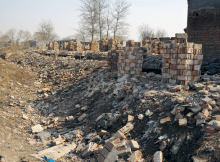
Review: The City Recycled: The Afterlives of Demolished Buildings in Post-war Beijing

Shih-yang Kao’s dissertation on demolition waste in Beijing provides rich material for scholars interested in the players involved in urban-rural discard commodity chains. While post-demolition waste was considered a resource for both socialist (1949-1978) and reform era (1978-present) governments, The City Recycled: The Afterlives of Demolished Buildings in Post-war Beijing narrates how values of waste shifted for each period, as well as how it continues to shift under different present-day policies, geographical locations, regional and local economies, and stakeholder groups.