Category Archives: Waste

Anthropocene Adjustments: Discarding the Technosphere

The technosphere refers to a new layer on the planet made up of “the interlinked set of communication, transportation, bureaucratic and other systems that act to metabolize fossil fuels and other energy resources.” We write this post to share some lingering thoughts on this theme, including what we think critical discard studies (CDS) might contribute to the technosphere discussion.
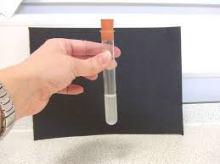
Tomorrow! Free training call on “What You Need To Know About Contaminated Drinking Water: A Focus on Lead”

Learn about water testing, particularly for lead, including what people need to know about testing, what to look for, who should do the testing, and how testing should be done. They will also discuss the EPA’s new procedures for sampling lead in drinking water and how these procedures (old and new) influence the results.

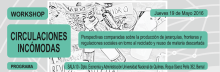
Workshop Circulaciones Icomodas (Mayo 19)

Perspectivas comparadas sobre la producción de jerarquías, fronteras y regulaciones sociales en torno al reciclado y reuso de materia descartada.
Jueves 19 de Mayo 2016
SALA 10 – Dpto. Economía y Administración Universidad Nacional de Quilmes, Roque Sáenz Peña 352, Bernal

Drawing the Invisible: An interview with the illustrator for the Radiation Monitoring Project

Communicating invisible threats is an area of interest in discard studies because it requires distilling and articulating the ideas that matter most in our concepts of contamination and harm. I asked Yuko some questions about the background and choices behind the images for the Radiation Monitoring Project.

CFP: ASLE Graduate Symposium 2016: Toxic Borders and Bondages (May 25)

We invite you to join us for the first Association for the Study of Literature and the Environment (ASLE) graduate student symposium at the University of Michigan, Ann Arbor from October 21st – 22nd, 2016. Leading up to ASLE’s 2017 biennial in Detroit, the symposium “Toxic Borders and Bondages: Intersecting Ecology with Capitalism, Racism, Heteropatriarchy […]
Read More »

CFP: Towards an ecology of neglected things

Neglected things are pervasive in numerous contemporary practices and imaginaries. Our patchy knowledge about them is co-produced with a specific social order (Jasanoff, 2004), which is politically shortsighted, negates materiality and environmental issues, and reduces the creativity of practices.

Article Alert! Table of Contents for new texts in Discard Studies

Since discard studies doesn’t have its own journal, conference, or department, Discard Studies publishes a regular table of contents alerts for articles, reports, and books in the field. There are the most recent publications as of the end of April, 2016: Barnard, Alex. (2016). Freegans: Diving into the Wealth of Food Waste in America. University of […]
Read More »

CFP: Libraries and Archives in the Anthropocene: A Colloquium

As stewards of a culture’s collective knowledge, libraries and archives are facing the realities of cataclysmic environmental change with a dawning awareness of its unique implications for their missions and activities.

Nutrient Rifts

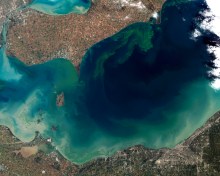
The nineteenth-century critique of the emerging “metabolic rift” between city sewers and country farms lamented that with the rise of the sanitary metropolis and the emergence of input-intensive agriculture in Europe and North America, products that had formerly connected urban and rural nutrient cycles were reclassified as waste.

Dumpster Diving at the World’s Largest Particle Accelerator

This is where the creative process foundational to science, fixing, and hacking come together. Rather than making more of the same, whether it’s in science or technology, the scientists, artists, and engineers at GOSH push boundaries, exceed norms, and open up possibilities. Trash is one avenue towards that goal.