Category Archives: World

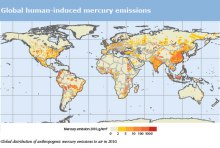
Special Issue on International Chemicals Regulation Following the Minamata Convention

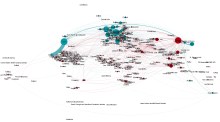
Legal frameworks are one main way through which chemicals are defined: terms of harm, responsibility, and circulation, some of the defining features of pollution, are debated, agreed upon, and codified in legal forums. The Minamanta Convention on Mercury is the first environmental agreement in a decade to set these terms across nations.

A Cabinet of Curiosities for the Anthropocene

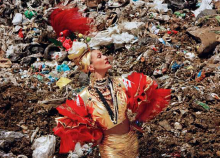
The Anthropocene is just one among many moments in time when new scientific objects have altered humanity’s relationship to the past, present, and future. Scientific objects such as fossils, radioactivity, genetic mutations, toxic pesticides, and ice cores, to name a few, have precipitated different narratives and imaginings of the human past and the human future. What might a cabinet of curiosities for the age of the Anthropocene look like?

New Article! The Politics of Open Defecation

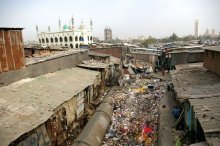
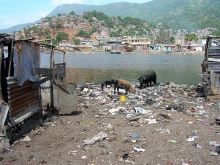
This paper examines the politics of open defecation by focusing on everyday intersections of the body and infrastructure in the metabolic city, which produces profoundly unequal opportunities for fulfilling bodily needs. Specifically, it examines how open defecation emerges in Mumbai’s informal settlements through everyday embodied experiences, practices and perceptions forged in relation to the materialities of informality and infrastructure.

Interactive Visualization of the Global Flow of Electronic Waste

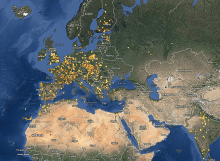
Josh Lepawsky’s work on “The changing geography of global trade in electronic discards” shows that over time, the global circulation of electronic waste is characterized by developing countries are exporting to developed nations. The data that lead to this analysis are now in an interactive format (cartograms) that allow viewers to see transactions 1996, and again in 2012.

Misleading waste statistics

A comparison of national waste statistics shows undeniable differences between countries. However, such statistics are in many ways misleading and highlights differences that may actually not be there.

Where Are We Now? Tsunami Debris Three Years Later

What we perhaps did not realize, as we geared up our initial response, was how deep the partnerships between all stakeholders would become. As months went by and debris washed up piece by piece, the scenarios and plans turned to real action. The action became more routine and the coordination more efficient. What has happened, in the three years we have worked on this issue, is that we now have a solid network of marine debris responders in our Pacific states.

Myopic spatial politics in dominant narratives of e-waste

A new article by Josh Lepawsky argues against the popular notion that e-waste travels predominantly from ‘developed’ countries to ‘undeveloped’ countries, and what this change means for regulation and recycling practices.

Crowdsourcing light pollution data: A means of infrastructure awareness?

The Globe at Night project is an international citizen-science campaign to measure the impact of light pollution. It invites citizen-scientists (aka: you) to measure their night sky brightness and submit their observations from a computer or smart phone. Yet, gathering information for a scientific project is really a side effect of the goals of the project, which is to raise awareness of the problem. While my views on awareness campaigns tend toward the critical, in many ways this is a campaign for infrastructural awareness.

A Review of Infrapolitics: The Social Life of Water in Mumbai

This review of Nikhil Anand’s dissertation, Infrapolitics: The Social Life of Water in Mumbai, written by Tarini Bedi, will be of interest to discard studies scholars because of the methodological approach and how it highlights the politics of infrastructure.

lo Squaderno special edition on Garbage & Wastes

In this issue of lo Squaderno we aim to discuss a good number of garbage stories. Today, garbage has immediate political significance, whether in the form of ecological and sanitary emergency, or in the form of disciplination of certain population segments. Indeed, waste provides a crucial complementary value in late-capitalist processes of differential accumulation: it is a marginal element that in fact turns out to play a central role in contemporary extractive logics of capitalism. Questioning waste, in all its possible political meanings, thus implies to directly address the complex and central place occupied by the margins in current late-neoliberal governmental politics.