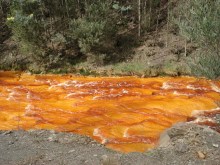
Treasure from trash: how mining waste can be mined a second time
Mines typically follow a set path from prospecting, to development, to extraction and finally closure as the finite resources are exhausted. But does that really need to be the end of the mine’s productive life?

Workshop: Opening the Bin – New perspectives on waste, culture and society from the humanities and the social sciences
The purpose of this two-day transdisciplinary workshop is to gather scholars from the social sciences and the humanities together with a few practitioners to critically discuss the places, roles and trajectories as well as the meanings, practices, and vocabularies of waste in culture and society.
Submission of abstract: December 1st, 2016

A Brief History of Anti-Capitalism, Pulled from a Dumpster
By Alex V. Barnard “Seeing all the waste exposes very clearly the priorities in our society, that making a profit is more important than feeding people, than preserving the environment, than making use of resources, than honoring peoples’ time, labor, love, and effort. What we see with waste is that once something cannot make money, it […]
Read More »

Article Alert! New texts in discard studies
Since discard studies doesn’t have its own journal, conference, or department, Discard Studies publishes a monthly table of contents alert for articles, reports, and books in the field. There are the most recent publications as of the end of May, 2016.

Anthropocene Adjustments: Discarding the Technosphere
The technosphere refers to a new layer on the planet made up of “the interlinked set of communication, transportation, bureaucratic and other systems that act to metabolize fossil fuels and other energy resources.” We write this post to share some lingering thoughts on this theme, including what we think critical discard studies (CDS) might contribute to the technosphere discussion.

A Bibliography for Teaching Flint
This bibliography is designed for professors who want to “teach Flint” in their classrooms. The Flint, Michigan water crisis is an extreme but quintessential case study that shows the intersections of environmental health, governance, the built environment, systemic racism, and social inequity.
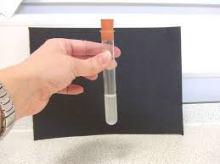
Tomorrow! Free training call on “What You Need To Know About Contaminated Drinking Water: A Focus on Lead”
Learn about water testing, particularly for lead, including what people need to know about testing, what to look for, who should do the testing, and how testing should be done. They will also discuss the EPA’s new procedures for sampling lead in drinking water and how these procedures (old and new) influence the results.
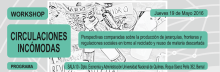
Workshop Circulaciones Icomodas (Mayo 19)
Perspectivas comparadas sobre la producción de jerarquías, fronteras y regulaciones sociales en torno al reciclado y reuso de materia descartada.
Jueves 19 de Mayo 2016
SALA 10 – Dpto. Economía y Administración Universidad Nacional de Quilmes, Roque Sáenz Peña 352, Bernal
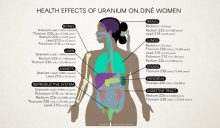
Drawing the Invisible: An interview with the illustrator for the Radiation Monitoring Project
Communicating invisible threats is an area of interest in discard studies because it requires distilling and articulating the ideas that matter most in our concepts of contamination and harm. I asked Yuko some questions about the background and choices behind the images for the Radiation Monitoring Project.
CFP: ASLE Graduate Symposium 2016: Toxic Borders and Bondages (May 25)
We invite you to join us for the first Association for the Study of Literature and the Environment (ASLE) graduate student symposium at the University of Michigan, Ann Arbor from October 21st – 22nd, 2016. Leading up to ASLE’s 2017 biennial in Detroit, the symposium “Toxic Borders and Bondages: Intersecting Ecology with Capitalism, Racism, Heteropatriarchy […]
Read More »

 Discard Studies