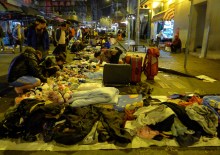
Trading on Obsolescence on the Streets of Hong Kong
The leveraging of the temporal lag between the developed and the developing world by these local street vendors enables them to generate additional value from the discarded. Second-hand goods becomes the means to access the consumer society that is characteristic of global cities.

The Value of Time and the Temporality of Value in Socialities of Waste
Drawing from long-term ethnographic research on a 25-year-old medical aid program linking the U.S. and Madagascar, I use this brief essay to trace how Malagasy and American participants engender different orientations to time through their work with discards, as they transform both discards’ value and the social relations surrounding them.

Dumpsters, difference, and illiberal embodiment
Food Not Bombs and endeavors like it, I would argue, also create the conditions to queer categories of embodiment like race, class, and sex and interrogate their privileged incorporation by prevailing markets, publics, and institutions, cultivating emergent spaces of embodiment, contact, and collaboration across difference.
Emergent Socialities of Waste
As the excesses, effluents, and excreta of larger social spheres are discarded, discounted, and possibly denigrated, what happens at those margins where they recirculate? What fissures in prevailing circulatory structures might we uncover, and how do people appropriate the myriad of social and material utility that persists therein? We explore the ways in which the materialities of waste, rubbish, refuse, debris, castoffs, and pollution enable new forms of sociality marked by generative practices of survival, adaptation, and critique.

Bigger, Better, Faster, More? Breaking the taboo of production
“When recycling is framed as the solution to waste problems, as it so often is in the case of e-waste, both the problem and the solution are mismatched. Recycling post-consumer commodities will do nothing to mitigate carbon dioxide emissions (or any other wastes) arising during manufacturing, long before we purchase that which we will later throwaway or recycle.” Instead, we need to look at slowing production if we want to make an impact on electronic waste.

Toxic Politics: A Collection of Research Projects
The global economy produces pervasive contaminants, harmful pollutants, damaging particles, and poisonous atmospheres, which are inescapably part of everyday life, though the harms and benefits are unevenly distributed. In the face of these conditions and challenges, people have been creating new forms of politics. The following collection of abstracts highlights research projects on toxic politics, providing a snapshot of the state of the field from around the world.

Refugees: Humans-as-Waste?
Discard studies is about more than discarded, wasted, unsaved, and externalized objects. It also includes people.

“The Dregs of the Library”: Trashing the Occupy Wall Street Library
When our library at Occupy Wall Street was destroyed, we used our beloved books tactically, as evidence, and then used the trauma of destruction to make a case for the illegitimacy of the violence committed when the library was destroyed. How do we voice and give and hear testimony when things we care for that are discarded?
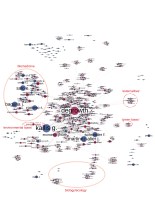
Special Issue on Discards, Diverse Economies, and Degrowth
Why do new economic imaginaries need to take up waste as a central issue? What do novel, non-capitalist economies mean for concepts and materialities of waste?

LA’s Shade Balls: The ecological costs of plastics in water
Putting 20,000 black plastic balls in water after people have been warned against throwing plastic into waterways has sparked a number of questions. Our plastic expert talks about what happens when water meets plastic:

 Discard Studies