New Article! The Politics of Open Defecation
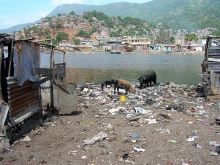
This paper examines the politics of open defecation by focusing on everyday intersections of the body and infrastructure in the metabolic city, which produces profoundly unequal opportunities for fulfilling bodily needs. Specifically, it examines how open defecation emerges in Mumbai’s informal settlements through everyday embodied experiences, practices and perceptions forged in relation to the materialities of informality and infrastructure.
Article Alert! Adjudicating Deep Time: Revisiting the United States’ High-Level Nuclear Waste Repository Project at Yucca Mountain
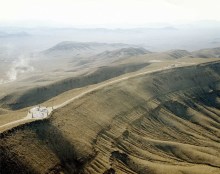
This paper draws upon perspectives on legal personhood, expert knowledge practices, and social relations influential in STS and anthropology to revisit the legal procedural framing of the United States’ now-defunct high-level nuclear waste repository project at Yucca Mountain.

Why “Discard Studies”? Why not “Waste Studies”?
Why call this sub-genre of research into waste “discard studies?” Why not call it “waste studies?” This is a question that comes up a lot. It’s a question Robin Nagle, who coined the term, and I have spoken about at length.

Interactive Visualization of the Global Flow of Electronic Waste
Josh Lepawsky’s work on “The changing geography of global trade in electronic discards” shows that over time, the global circulation of electronic waste is characterized by developing countries are exporting to developed nations. The data that lead to this analysis are now in an interactive format (cartograms) that allow viewers to see transactions 1996, and again in 2012.

Bringing Waste to Public Spaces: Discussion with Artist Keeley Haftner
Keeley Haftner’s public art, two shrink-wrapped bails of recyclable materials, was inspired by her time as a sort-liner at the city’s local recycling plant. Now vandalized, draped in a black tarp and bearing a sign that states, “Our tax dollars are for keeping garbage OFF the streets”, the installation has started a dialogue about waste and art in public spaces.

Modern Waste is an Economic Strategy
Industry developed disposability through planned obsolescence, single-use items, cheap materials, throw-away packaging, fashion, and conspicuous consumption. American industry designed a shift in values that circulated goods through, rather than into, the consumer realm. The truism that humans are inherently wasteful came into being at a particular time and place, by design.
The Rare Earth Catalog (and Research Group): Tools for Reckoning with the Anthropocene
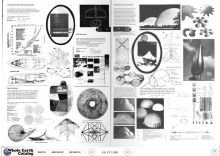
The Rare Earth Catalog will be a repository of tools: from the critical, to the conceptual, to the practical, that can help us resist, rework, redefine, and remember the interconnections of our socio-ecological present. We are seeking collaborators to help us envision and ultimately produce the Catalog. We are also interested in receiving contributions of (short) texts and images that connect specific examples of climate-change related politics and processes to a wide range of themes, including waste, fixing, and pollution.

A floating cabinet of contaminated curiosities launches 6/28
Artist Paul Lloyd Sargent launches Artificial Corridors, a project to pilot a 19-foot, open-hulled powerboat, to navigate across the New York State Canal System and down the Hudson River, and to transport a cargo comprised of remnants of the Great Lakes Basin’s toxic legacy.
Speculative Historiographies of Techno-Trash
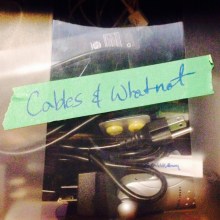
The project asks: “what if we were required to physically store and care for our personal devices, such as cell phones and desktop computers, long after these machines served their intended function? In such an imaginary, unusable technologies remain within our sights, and in our sites.” They are asking people to submit their stories.

Archaeogaming and punk archeology in discard studies
Archaeogaming is as much about exploring and conducting archaeology within gaming environments (virtual space) as it is about understanding the history of video games in the real world (meat space).
What are the frontiers in discard studies that would benefit from punk archeology?

 Discard Studies