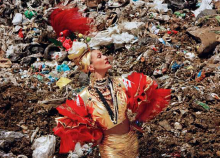
lo Squaderno special edition on Garbage & Wastes
In this issue of lo Squaderno we aim to discuss a good number of garbage stories. Today, garbage has immediate political significance, whether in the form of ecological and sanitary emergency, or in the form of disciplination of certain population segments. Indeed, waste provides a crucial complementary value in late-capitalist processes of differential accumulation: it is a marginal element that in fact turns out to play a central role in contemporary extractive logics of capitalism. Questioning waste, in all its possible political meanings, thus implies to directly address the complex and central place occupied by the margins in current late-neoliberal governmental politics.
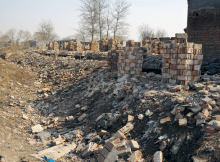
Review: The City Recycled: The Afterlives of Demolished Buildings in Post-war Beijing
Shih-yang Kao’s dissertation on demolition waste in Beijing provides rich material for scholars interested in the players involved in urban-rural discard commodity chains. While post-demolition waste was considered a resource for both socialist (1949-1978) and reform era (1978-present) governments, The City Recycled: The Afterlives of Demolished Buildings in Post-war Beijing narrates how values of waste shifted for each period, as well as how it continues to shift under different present-day policies, geographical locations, regional and local economies, and stakeholder groups.
The Decompository at the Arnold Arboretum
Most Arboretums don’t put their dirt, waste, and decomposition on visitor maps. In July, via a workshop on Digital STS at Boston’s Arnold Arboretum, we fixed that. We created “The Decompository” for the Arboretum. The Decompository cataloged the entire, often dirty, frequently smelly, certainly decomposing urban ecology of the park could be made more apparent for visitors and researchers.

Body Burdens, Biomonitoring, and Biocitizenship
By Max Liboiron, Lindsey Dillon, and submitting authors. Since at least the publication of Silent Spring, scientists, policy-makers, and the general public has focused on pollution in the environment as the object of regulation and control, a source of fear and anxiety, and the subject of scientific testing. As technologies, analytical detection limits, and eco-populist, […]
Read More »

Chennai Waste, Part 3: Perungudi: A fortress of trash
For Sendhil, it’s all about keeping the trucks coming in at the right time, at the right pace. “If work stops here, then they’ll be a line of trucks waiting, people’s trash won’t get picked up. So, we just have to make sure everything keeps going.” Thus, he’s not concerned about segregation, or recycling. What he needs are good roads, infrastructure, he says. Only with that can they keep pushing the trash away from the houses, and prevent “incidents” like the small fires that break out on occasion.
Chennai Waste, Part 2: The rural urban divide and caste politics
While most of my middle class informants have shied away from discussing caste, and instead point to class as being more of a social indicator in Chennai nowadays, Elango is insistent that “development and economics are masking the social, caste system.” Urbanization is just a process; caste is a system, a way of life so deeply entrenched that it has become taken for granted. This caste system entrenchment has in turn translated into not only a lack of empathy, but a sense that certain people belong or deserve certain tasks, such as clearing garbage, or waste picking. Elango’s words reminded me of a Ramky Group (a private company in charge of waste disposal for a few Chennai zones) street sweeper in Mylapore with whom I spoke in April, who echoed this idea that people don’t stop to think that someone is coming behind them to clean up the garbage they throw on the streets.

Chennai Waste, Part 1: Informally tracking the trash in Mylapore
By Ashwini Srinivasamoha. Chennai, the Indian state capital of Tamil Nadu, is the sixth most populous city in India, and is located on the southeast coast of India. One of the most severe environmental and public health issues facing Chennai is waste, and is currently managed through two refuse dumps, receiving over 5,000 tons of […]
Read More »
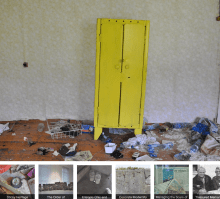
Ruin Memories Portfolio online
Numerous studies have focused on modernity’s destructive effect on traditional life- worlds, the desertion of villages and the ruination of rural areas. However, the fact that the modern condition also produces its own ruined materialities, its own marginalized pasts, is less spoken about. Since the 19th century, mass-production, consumerism and thus cycles of material replacement […]
Read More »

Twenty-first century nuisance law and the continued entanglement of race, gender, property, and violence
“It has generally been held that an in most instances rightly held that the degree of dilution necessary is merely that which will prevent a nuisance, having reference primarily to unsightly floating matter and bad odors. For most rivers and many of the smaller streams of the country, this requirement as to the cleanness of […]
Read More »

Inventive repair, or, the aesthetics of material hacks
Before disposability, before planned obsolescence, and even before mass production really entered its modern phase, there reined a different kind of material relation with broken objects. Waste historian Susan Strasser calls this ethos “stewardship,” characterized by handwork, repair, and making do: “We are not likely to revive the stewardship of objects and materials, formed in […]
Read More »

 Discard Studies