
Surveillance and Waste: the art, the history, the law
By Max Liboiron. I want to be as surprised by my work as anyone else. For me, the joy in creating is that the creation takes on a life of its own. I am interested in exploring the intersection between art and life, between nature and artifice. – Heather Dewey Hardborg, artist In her much-lauded […]
Read More »

Methodologies: How to Read a Landscape
Discard studies are often entwined with landscapes. Ruins, environmental contamination, xenogarbology (the study of trash in space), ocean plastics, global e-waste flows, and urban waste are all place or space contingent. Thus, reading landscapes can be a valuable methodology for us. A fantastic example is the landscape ethnography Beyond Passaic: Contamination, security threats, hobo encampments. A […]
Read More »

Ocean Floor Trash: The Study
There’s an adage is discard studies that although we throw things “away,” there really is no such place. The ocean has been a convenient “away” for centuries, the idea being that the vast quantities of water can dilute anything, and its status as a last frontier makes it “ideal” for nuclear waste deposits and other waste. The ocean is […]
Read More »

Wall Dogs
Writing for Biz Journals, Michael DeMasi reports on Albany, New York’s efforts to preserve fading advertisements on the sides of city buildings. As part of Albany’s Sculpture in the Streets exhibit (sponsored by the Downtown Albany Business Improvement District), the work of 19th and early 20th century “wall dogs” (muralists who adorned buildings with colorful […]
Read More »

Not scrap metal
“The past…is constantly being broken down and reintegrated into the present…” (Lucy Lippard, The Lure of the Local, p.85). This is a photograph I took recently of the twisted, rusted metal that forms the centerpiece of the memorial park in the small New Jersey town I live in. Surrounded by greenery, the monolithic steel was […]
Read More »

Virality: Contagion Theory in the Age of Networks
Contagion, or the way disease, disgust and dirt circulates, how the effects of dirt transfer to bodies, and how harm is conceptualized, is central to discard studies. From miasma, through the germ theory of disease, and now for chronic, pervasive models of pollution brought about by endocrine distributors and radiation, theories of contagion have been […]
Read More »

Don’t save the contradictory seals
“In the end, the biggest problem with green consumerism may be that it acts as a smokescreen, creating the impression that people are taking environmental issues seriously while allowing them to continue their lives as usual.” Lee and English 2011 While promoting the sales of building products for the construction industry, the greenproducts website features […]
Read More »

‘Detritivore’ Design: How to Use Trash to Create Scalable Tech Solutions- Mathew Lippincott
Guest post by Mathew Lippincott. Originally posted on Mediashift’s Idea Lab. Detritivores are creatures that consume decaying matter. Detritivore designs use abundant waste products to make scalable technology solutions. Unlike loftier concepts of zero-waste design such as Cradle to Cradle, Detritivore design accepts that the world is already loaded with discarded and broken technology. Detritivore designers need […]
Read More »

Cooper Union Student Protest: Cleaning Up their School
By Max Liboiron. Around one hundred Cooper Union students are in the third day of occupying the office of their president. The protest comes after a vastly unpopular decision by their board of trustees, lead by school president Bharucha, to end their more than 100 year tradition of a tuition-free school. They are fighting against an […]
Read More »
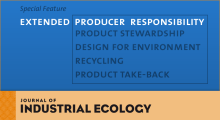
Shifting the Burden of Recycling: Yale Journal Explores the State of Extended Producer Responsibility
Via Reid Lifset, editor of Journal of Industrial Ecology (JIE): Over the past two decades governments around the world have been experimenting with a new strategy for managing waste. By making producers responsible for their products when they become wastes, policy makers seek to significantly increase the recycling-and recyclability-of computers, packaging, automobiles, and household hazardous […]
Read More »

 Discard Studies