Author Archives: Max Liboiron

Bibliography on Action-Based Research Methods

As researchers, we often want to make material and social changes through our work. Regardless of our institutional affiliations and disciplines, there are concrete ways to achieve this, many of which are not taught in traditional university methods courses.

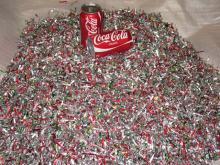
Dumpster Diving at the World’s Largest Particle Accelerator

This is where the creative process foundational to science, fixing, and hacking come together. Rather than making more of the same, whether it’s in science or technology, the scientists, artists, and engineers at GOSH push boundaries, exceed norms, and open up possibilities. Trash is one avenue towards that goal.

The Politics of Recycling vs. Reusing

Calling reuse “recycling” a common and seemingly simple mistake, yet it is extremely important to differentiate between the two for political and environmental reasons.

Toxic Symposium on Exposure, Entanglement, and Endurance: A Summary in Tweets

Toxics: A Symposium on Exposure, Entanglement, and Endurance was heralded as “the most important conversation on body burdens yet.” See the Twitter version of that conversation here.

Municipal versus Industrial Waste: Questioning the 3-97 ratio

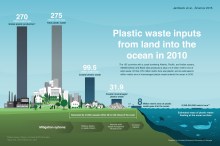
We do not have an idea of the quantity of non-household solid waste produced in North America. When we do have ideas of (sub)quantities, we do not have good classifications, so we do not know what we are quantifying.

How to do a household waste audit–and why

A waste audit is an analysis of a localized waste stream from your building, household, classroom, town or business. It can identify what types of waste that local generates, and how much. How do you conduct an audit? What can you learn from one?

Building DIY citizen science technology to see invisible marine plastics

We’ve been working on the problem of making tiny, often invisible marine plastics visible through do-it-yourself (DIY) technologies. You can build your own and investigate your local environment.

A Circular Economy? Disruptive Innovation Festival

What is the circular economy, exactly? Is it capitalism with better accounting? Is it about scaling up recycling and reuse? Is it about consuming less, and producing less, or consuming and producing fundamentally differently? Does it go so far as to advocate for a degrowth or steady state economy, where the loop on production and consumption is totally closed?

Roundtable reviews of “Banned: A History of Pesticides and the Science of Toxicology”

If you’re interested in the history of pesticides and toxicology, Banned provides a detail-oriented, close reading of key 20th century experiments, legislative hearings, events, and texts to investigate how scientific facts and legislative decisions about pesticides were made.

The Ocean Conservatory’s Call for Mass Incineration in Asia: Disposability for Profit, Fantasies of Containment, & Colonialism

The Ocean Conservatory would like to burn 80% of the waste in coastal Asia with US-made incinerators. According to a wide range of experts and grassroots organizations from around the world, that’s a problem.