Category Archives: Aesthetics

Designing for the Future at Giant Mine

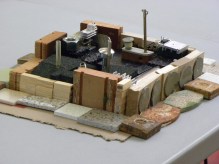
How do you communicate permanent pollution and toxicity to future generations? We held workshops with community members in Yellowknife and Dettah to make models about they would communicate the dangers of buried arsenic at the local Giant Mine into the future.

Temporality and Waste: Slow Violence

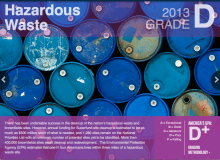
The distribution of environmental damage in time as well as space is a key aspect of this problem, one not always recognized in the oft-invoked notion of pollution as “matter out of place.”

Visually Representing Slow Disasters

Slow violence and chronic disasters create a representational challenge. How do you visualize a non-event so that it imparts the severity of the problem without turning it into an event?

The Perils of Ruin Porn: Slow Violence and the Ethics of Representation

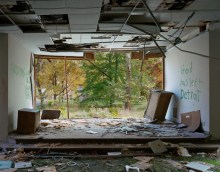
The main argument against cinematic, photogenic images of ruination is that they can work against revitalization, and obscure systemic problems that cause certain patterns of ruination and harm.

Queering Waste Through Camp

Like queer theory, discard studies is interested in uneven remainders, things that don’t fit neatly into categories. Both concern themselves with the strange and imperfect construction of divisions that do violence to humans, cultures, and environments, while still attending to the fact that these divisions have meaning for people, that they are strategic, and that they structure our thought in ways that are almost impossible to escape.

Abjection: A definition for discard studies

Abjection describes a social and psychological process by which things like garbage, sewage, corpses and rotting food elicit powerful emotional responses like horror and disgust.

Bringing Waste to Public Spaces: Discussion with Artist Keeley Haftner

Keeley Haftner’s public art, two shrink-wrapped bails of recyclable materials, was inspired by her time as a sort-liner at the city’s local recycling plant. Now vandalized, draped in a black tarp and bearing a sign that states, “Our tax dollars are for keeping garbage OFF the streets”, the installation has started a dialogue about waste and art in public spaces.

A floating cabinet of contaminated curiosities launches 6/28

Artist Paul Lloyd Sargent launches Artificial Corridors, a project to pilot a 19-foot, open-hulled powerboat, to navigate across the New York State Canal System and down the Hudson River, and to transport a cargo comprised of remnants of the Great Lakes Basin’s toxic legacy.

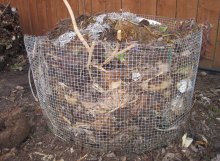
Special issue of Green Letters on junk and composting

Green Letters: Studies in Ecocriticism is a journal that explores the relationship between literary, artistic and popular culture and concepts of the environment. They are concerned with aesthetics, metaphors, representations and rhetorics of waste in their newest special issue dedicated to “junk and composting.”

The visual culture of post-disaster high water marks

f you look at enough photographs of disasters, you will see people posing with high water marks. It is a genre of photography onto itself: over and over, they will point to the mark, put their bodies in front of the mark, or photograph the high water line alone. This post explores the possible roles that the visual culture of post-disaster high water marks play, especially given the prevalence of the genre across disasters, geography, and time.