Environmental historians get wasted: ASEH conference report
What’s my take on this torrent of waste at ASEH? I think it really signals a maturation of a second generation of waste scholarship in environmental history that began in the early 2000s.
What’s my take on this torrent of waste at ASEH? I think it really signals a maturation of a second generation of waste scholarship in environmental history that began in the early 2000s.

A study of men from the Faroe Islands finds that high DDT and PCB exposure during adolescence and adulthood is associated with abnormal chromosomes in sperm. By Brian Bienkowski, EHN.
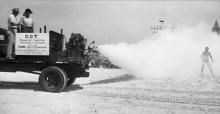
If you’re interested in the history of pesticides and toxicology, Banned provides a detail-oriented, close reading of key 20th century experiments, legislative hearings, events, and texts to investigate how scientific facts and legislative decisions about pesticides were made.
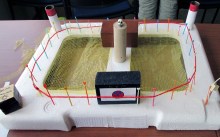
By Arn Keeling “Project Dystopia,” “The Information Tomb” and the “Giant Facility for Environmental Hazards” were among the conceptual models developed for markers and warning systems at Yellowknife’s Giant Mine by a class of cultural geography students at Memorial University. The abandoned Giant Mine in Canada’s Northwest Territories is the location of 237,000 tonnes of […]
Read More »

The Anthropocene is just one among many moments in time when new scientific objects have altered humanity’s relationship to the past, present, and future. Scientific objects such as fossils, radioactivity, genetic mutations, toxic pesticides, and ice cores, to name a few, have precipitated different narratives and imaginings of the human past and the human future. What might a cabinet of curiosities for the age of the Anthropocene look like?

Industry developed disposability through planned obsolescence, single-use items, cheap materials, throw-away packaging, fashion, and conspicuous consumption. American industry designed a shift in values that circulated goods through, rather than into, the consumer realm. The truism that humans are inherently wasteful came into being at a particular time and place, by design.
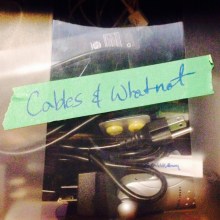
The project asks: “what if we were required to physically store and care for our personal devices, such as cell phones and desktop computers, long after these machines served their intended function? In such an imaginary, unusable technologies remain within our sights, and in our sites.” They are asking people to submit their stories.

Archaeogaming is as much about exploring and conducting archaeology within gaming environments (virtual space) as it is about understanding the history of video games in the real world (meat space).
What are the frontiers in discard studies that would benefit from punk archeology?

People tend to think that we are familiar with waste because we deal with it every day. Yet, this is not the case. Discard studies is central to thinking through and countering the initiative aspects of waste. As more popular, policy, activist, engineering and research attention is drawn to waste it becomes crucial for the humanities and social sciences to contextualize the problems, materialities and systems of waste that are not readily apparent to the invested but casual observer. Our task is to trouble the assumptions, premises and popular mythologies of waste so that work can go in a productive direction.
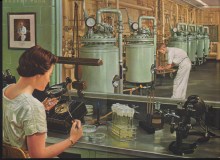
The petri dish was made for separation. As part of its ability to make separations between the contaminated world outside and the uncontaminated world inside, the dish also assisted in separating individuals from disease. These days, it’s getting harder for petri dishes to maintain these separations.

 Discard Studies