Category Archives: Government

Roundtable reviews of “Banned: A History of Pesticides and the Science of Toxicology”

If you’re interested in the history of pesticides and toxicology, Banned provides a detail-oriented, close reading of key 20th century experiments, legislative hearings, events, and texts to investigate how scientific facts and legislative decisions about pesticides were made.

The Power Behind Disposability: Why New York City’s ban on polystyrene was vilified, sued, and reversed

On July 1 New York City banned disposable Styrofoam containers. First they were sued over the decision, and last week the ban was overturned. What is the big deal? The answer, not surprisingly, is profit. Industry saves money through the creation of disposables. And disposables are only environmentally acceptable if they are recycled. Except they aren’t.

Dumpsters, difference, and illiberal embodiment

Food Not Bombs and endeavors like it, I would argue, also create the conditions to queer categories of embodiment like race, class, and sex and interrogate their privileged incorporation by prevailing markets, publics, and institutions, cultivating emergent spaces of embodiment, contact, and collaboration across difference.

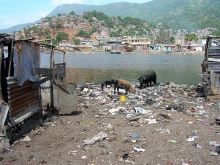
Refugees: Humans-as-Waste?

Discard studies is about more than discarded, wasted, unsaved, and externalized objects. It also includes people.

“The Dregs of the Library”: Trashing the Occupy Wall Street Library

When our library at Occupy Wall Street was destroyed, we used our beloved books tactically, as evidence, and then used the trauma of destruction to make a case for the illegitimacy of the violence committed when the library was destroyed. How do we voice and give and hear testimony when things we care for that are discarded?

LA’s Shade Balls: The ecological costs of plastics in water

Putting 20,000 black plastic balls in water after people have been warned against throwing plastic into waterways has sparked a number of questions. Our plastic expert talks about what happens when water meets plastic:

Researcher Activism: The Gutting of Discard Science in Canada and the Write2Know Campaign

Being able to identify the materials in waste, its location, and its effects are the first steps in making decisions about waste. But all three of those abilities have been “gutted” by the Canadian federal government’s “war on science.”

New Article! The Politics of Open Defecation

This paper examines the politics of open defecation by focusing on everyday intersections of the body and infrastructure in the metabolic city, which produces profoundly unequal opportunities for fulfilling bodily needs. Specifically, it examines how open defecation emerges in Mumbai’s informal settlements through everyday embodied experiences, practices and perceptions forged in relation to the materialities of informality and infrastructure.

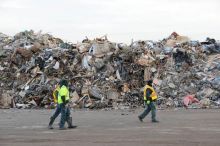
Commissioner of NYC’s Department of Sanitation on Hurricane Sandy

The following is a statement by John Doherty, Commissioner of the New York City Department of Sanitation, about the department’s response to Hurricane Sandy.

Solutions to waste and the problem of scalar mismatches

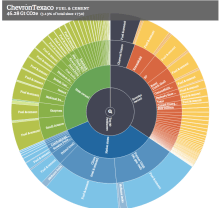
Waste advocacy and popular environmentalism suffer from a constant mismatch of scales. Problems are at one scale, and solutions are at another. This article calls for shift in cultural discourses that include proportion and scale so that information, problem identification, and proposed solutions are able to intervene into problems in meaningful and effective ways.