Category Archives: World

Review: The City Recycled: The Afterlives of Demolished Buildings in Post-war Beijing

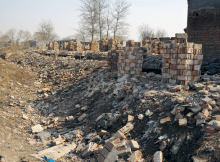
Shih-yang Kao’s dissertation on demolition waste in Beijing provides rich material for scholars interested in the players involved in urban-rural discard commodity chains. While post-demolition waste was considered a resource for both socialist (1949-1978) and reform era (1978-present) governments, The City Recycled: The Afterlives of Demolished Buildings in Post-war Beijing narrates how values of waste shifted for each period, as well as how it continues to shift under different present-day policies, geographical locations, regional and local economies, and stakeholder groups.

Chennai Waste, Part 3: Perungudi: A fortress of trash

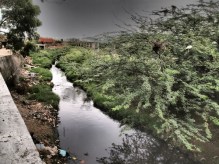
For Sendhil, it’s all about keeping the trucks coming in at the right time, at the right pace. “If work stops here, then they’ll be a line of trucks waiting, people’s trash won’t get picked up. So, we just have to make sure everything keeps going.” Thus, he’s not concerned about segregation, or recycling. What he needs are good roads, infrastructure, he says. Only with that can they keep pushing the trash away from the houses, and prevent “incidents” like the small fires that break out on occasion.

Chennai Waste, Part 2: The rural urban divide and caste politics

While most of my middle class informants have shied away from discussing caste, and instead point to class as being more of a social indicator in Chennai nowadays, Elango is insistent that “development and economics are masking the social, caste system.” Urbanization is just a process; caste is a system, a way of life so deeply entrenched that it has become taken for granted. This caste system entrenchment has in turn translated into not only a lack of empathy, but a sense that certain people belong or deserve certain tasks, such as clearing garbage, or waste picking. Elango’s words reminded me of a Ramky Group (a private company in charge of waste disposal for a few Chennai zones) street sweeper in Mylapore with whom I spoke in April, who echoed this idea that people don’t stop to think that someone is coming behind them to clean up the garbage they throw on the streets.

Chennai Waste, Part 1: Informally tracking the trash in Mylapore

By Ashwini Srinivasamoha. Chennai, the Indian state capital of Tamil Nadu, is the sixth most populous city in India, and is located on the southeast coast of India. One of the most severe environmental and public health issues facing Chennai is waste, and is currently managed through two refuse dumps, receiving over 5,000 tons of […]
Read More »

Litterati: A Digital Landfill of Good-Looking Trash

By Max Liboiron. I suspect, that like me, urban followers of the Discard Studies blog spend a lot of time looking down. There is a lot of interesting trash on sidewalks, roads, and gutters, and now there is a place to share your awareness with the world (provided you have a smart phone): Litterati, the […]
Read More »

The Plastisphere and other 21st century waste ecosystems

By Max Liboiron. You’ve probably heard of “The Great Pacific Garbage Patch” or “The Gyre,” or other names given to the phenomenon of ocean plastics. You may have asked yourself why we just don’t clean it all up with a giant sea-vacuum. You may have even seen inventions meant to do just that. But perhaps […]
Read More »

E-waste Academy for Scientists and Social Scientists (deadline July 31)

Organised by the United Nations University under the aegis of the StEP Initiative, the EWAS has over the past three editions brought together nearly 60 young researchers from around the world, looking at solving the e-waste from different disciplinary perspectives. It has become the foremost forum available to young scientists to share their knowledge, interact […]
Read More »

Ocean Floor Trash: The Study

There’s an adage is discard studies that although we throw things “away,” there really is no such place. The ocean has been a convenient “away” for centuries, the idea being that the vast quantities of water can dilute anything, and its status as a last frontier makes it “ideal” for nuclear waste deposits and other waste. The ocean is […]
Read More »

Shifting the Burden of Recycling: Yale Journal Explores the State of Extended Producer Responsibility

Via Reid Lifset, editor of Journal of Industrial Ecology (JIE): Over the past two decades governments around the world have been experimenting with a new strategy for managing waste.  By making producers responsible for their products when they become wastes, policy makers seek to significantly increase the recycling­-and recyclability­-of computers, packaging, automobiles, and household hazardous […]
Read More »

Tsunami Debris and the Hope of Return

Guest post by Kim DeWolff via her blog Plasticized. On a sunny spring morning we walk the Arahama coast near Sendai, the largest city in the Tohoku region that experienced the March 2011 tsunami. Two years and a few days later, yellowed grass stands in cracked concrete outlines of houses, bathroom tiles still recognizable. A […]
Read More »