Category Archives: Justice (EJ)

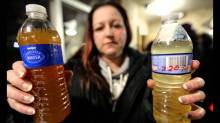
A Bibliography for Teaching Flint

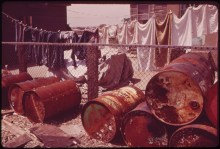
This bibliography is designed for professors who want to “teach Flint” in their classrooms. The Flint, Michigan water crisis is an extreme but quintessential case study that shows the intersections of environmental health, governance, the built environment, systemic racism, and social inequity.

Thompson on Sills, ‘Toxic War: The Story of Agent Orange’

The use of the defoliant Agent Orange by the United States is one of the most controversial actions of the Vietnam War. InToxic War: The Story of Agent Orange, Peter Sills provides much-needed clarity to the history of Agent Orange with his use of data made available by legal proceedings.

Refusal as Research Method in Discard Studies

Ethnographic refusal is a practice by which researchers and research participants together decide not to make particular information available for use within the academy. Its purpose is not to bury information, but to ensure that communities are able to respond to issues on their own terms.

Toxic Symposium on Exposure, Entanglement, and Endurance: A Summary in Tweets

Toxics: A Symposium on Exposure, Entanglement, and Endurance was heralded as “the most important conversation on body burdens yet.” See the Twitter version of that conversation here.

Which came first: people of colour or pollution?

A pair of new publications focus on the “chicken or egg” question in environmental justice: Are present-day disparities around hazardous sites the result of a pattern of placing hazardous waste sites, polluting industrial facilities, and other locally unwanted land uses (LULUs) disproportionately where poor people and people of color live? Or are they the result of demographic changes that occur after the facilities have been sited?

The Ocean Conservatory’s Call for Mass Incineration in Asia: Disposability for Profit, Fantasies of Containment, & Colonialism

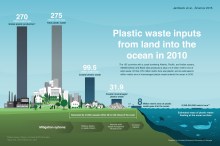
The Ocean Conservatory would like to burn 80% of the waste in coastal Asia with US-made incinerators. According to a wide range of experts and grassroots organizations from around the world, that’s a problem.

Toxic Politics: A Collection of Research Projects

The global economy produces pervasive contaminants, harmful pollutants, damaging particles, and poisonous atmospheres, which are inescapably part of everyday life, though the harms and benefits are unevenly distributed. In the face of these conditions and challenges, people have been creating new forms of politics. The following collection of abstracts highlights research projects on toxic politics, providing a snapshot of the state of the field from around the world.

“The Dregs of the Library”: Trashing the Occupy Wall Street Library

When our library at Occupy Wall Street was destroyed, we used our beloved books tactically, as evidence, and then used the trauma of destruction to make a case for the illegitimacy of the violence committed when the library was destroyed. How do we voice and give and hear testimony when things we care for that are discarded?

Designing for the Future at Giant Mine

How do you communicate permanent pollution and toxicity to future generations? We held workshops with community members in Yellowknife and Dettah to make models about they would communicate the dangers of buried arsenic at the local Giant Mine into the future.

Food Banks: Canned Justice or Fuel For activism?

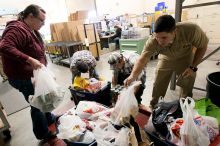
By Aaron Vansintjan. How the food industry made waste ‘benevolent’. Food Banks: Canned Justice or Fuel For activism?